


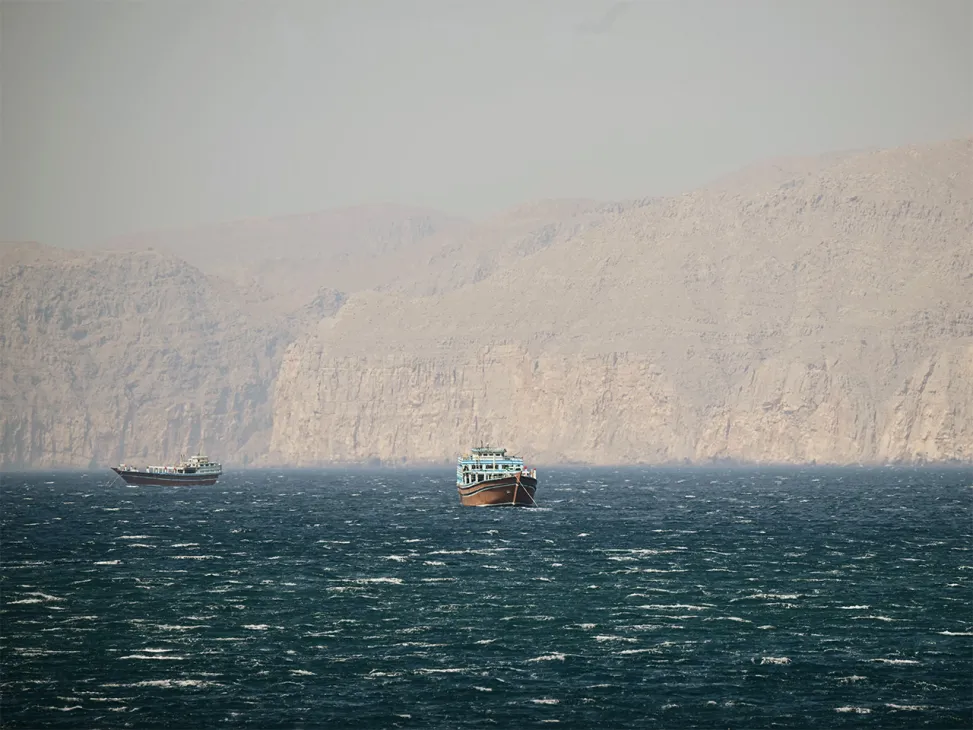
Several African countries remain highly vulnerable to disruptions in global energy markets due to their dependence on oil imports that pass through the Strait of Hormuz, one of the world’s most strategically important maritime trade routes.
The narrow waterway, located between the Persian Gulf and the Gulf of Oman, handles a significant share of global oil exports. Any disruption to shipping through the strait has the potential to trigger sharp increases in global fuel prices, placing additional pressure on import-dependent economies.
According to data from the United Nations Conference on Trade and Development (UNCTAD), a number of African countries source a substantial portion of their petroleum imports from suppliers whose exports transit through the Strait of Hormuz, exposing them to supply disruptions and price volatility.
Small island states and countries with limited domestic energy production are among the most exposed. Seychelles ranks as one of the most dependent African economies, with the majority of its oil imports linked to supply chains connected to the Gulf region. Mauritius and Tanzania also face significant exposure, with more than half of their oil imports linked to the Hormuz corridor.
The risks extend beyond energy security. Rising oil prices can increase transport and electricity costs, fuel inflation, strain foreign exchange reserves, and place additional pressure on government budgets.

UNCTAD estimates that a 50% increase in global oil prices could add more than US$20 billion annually to the fuel import bill of vulnerable economies worldwide. Least developed countries could face an additional US$16.1 billion in costs, while small island developing states could absorb a further US$4.3 billion.
For many African economies, higher fuel costs could widen fiscal deficits and reduce resources available for critical sectors such as healthcare, education, infrastructure, and social protection.
The challenge is particularly acute for countries that rely heavily on imported refined petroleum products and have limited capacity to diversify supply sources. In these markets, fluctuations in global oil prices often have immediate impacts on consumer prices and economic growth.
Analysts note that improving energy security will require a combination of strategies, including diversifying fuel suppliers, investing in domestic refining capacity, expanding renewable energy generation, and strengthening regional energy trade networks.
The findings highlight the broader vulnerability of many developing economies to geopolitical tensions and supply disruptions affecting key global trade routes. As uncertainty in international energy markets persists, African governments are increasingly being encouraged to pursue long-term energy resilience measures to reduce dependence on external supply shocks.
While the Strait of Hormuz remains a vital artery for global energy trade, the experience of many African countries underscores the importance of building more diversified and resilient energy systems capable of withstanding future disruptions.