


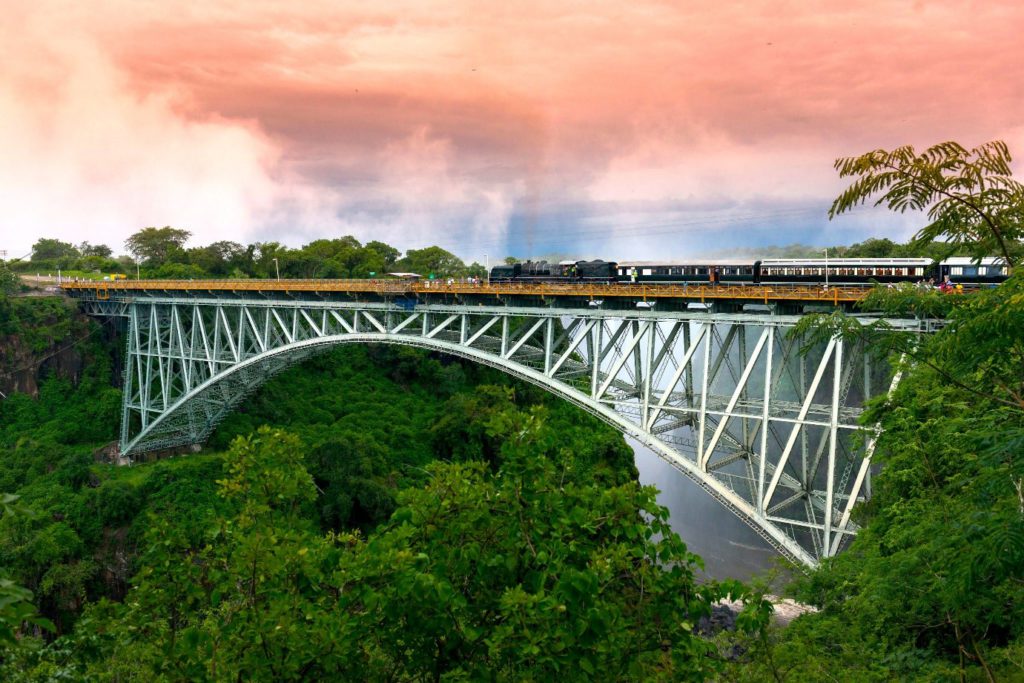
Zambia and Zimbabwe have agreed to ban heavy trucks and freight trains from crossing the Victoria Falls Bridge, marking a significant shift in regional transport policy aimed at protecting infrastructure and improving tourism safety.
The decision comes amid growing concerns over the structural strain on the century-old bridge, which has long served as a critical link for both trade and travel between the two countries. Built in 1905, the bridge remains one of the most iconic transport corridors in southern Africa, carrying both road and rail traffic across the Zambezi River.
Zambian President Hakainde Hichilema confirmed that the two governments will redirect heavy-duty traffic away from the bridge and instead develop a new road and rail crossing downstream. This alternative route is expected to accommodate modern freight demands while preserving the historic structure.
The move effectively separates commercial logistics from tourism activity. The Victoria Falls area is a major international tourist destination, and reducing heavy traffic is expected to enhance visitor safety and overall experience.
From a trade perspective, the restriction highlights a broader shift toward upgrading regional infrastructure to match growing freight volumes. While the bridge has historically handled both cargo and passenger movement, its age and design limitations have made it increasingly unsuitable for modern heavy loads.

Authorities say the planned infrastructure investment will not only ease pressure on the existing bridge but also improve efficiency in cross-border logistics. The new crossing is expected to support both rail and road freight, aligning with wider efforts to strengthen regional trade corridors across southern Africa.
The policy also reflects a balancing act between economic activity and asset preservation. By diverting heavy freight, Zambia and Zimbabwe aim to extend the lifespan of one of Africa’s most important engineering landmarks while ensuring that trade flows continue through more suitable infrastructure.