


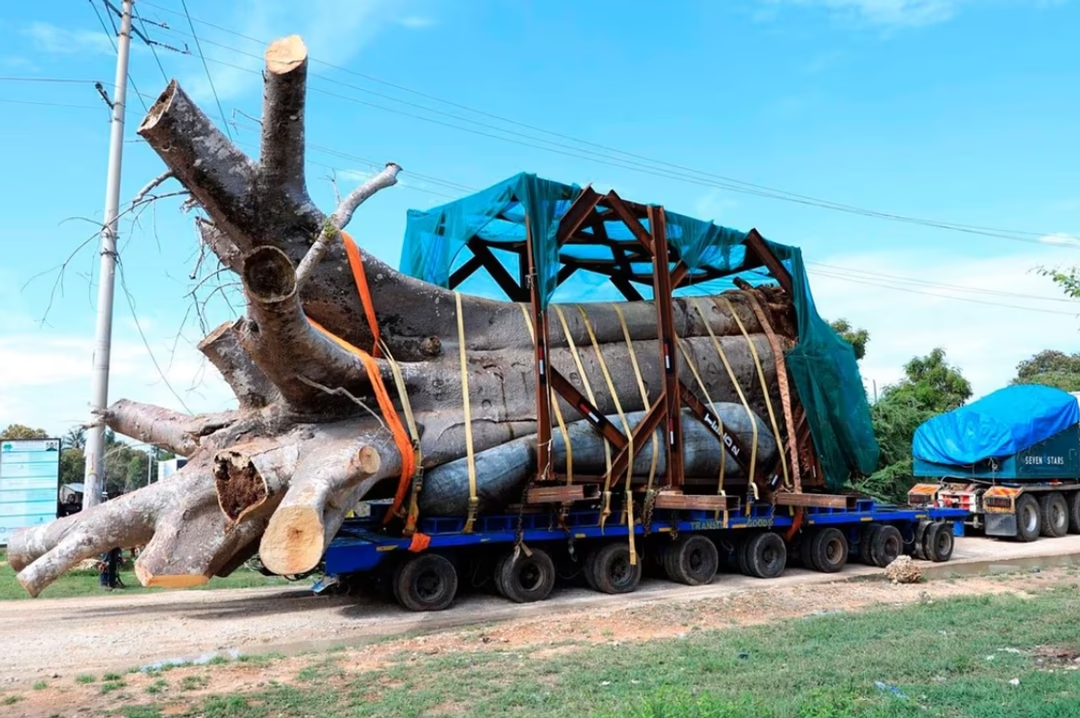
South African authorities have opened a criminal case against an unidentified exporter accused of attempting to export five protected baobab trees to Georgia without the required permits. The trees remain at a warehouse in Durban while the investigation continues.
The Department of Forestry, Fisheries and the Environment (DFFE) said the trees were removed from the Lephalale Local Municipality in Limpopo’s Waterberg District and were scheduled for export to Georgia. The department confirmed that the exporter had not obtained a valid licence for the shipment.
According to the DFFE, the exporter applied for a licence on 27 July 2026 covering the removal, possession, collection, transportation, export and purchase of the trees. The application was rejected on 31 July because the matter was already under criminal investigation. The department said it would not issue a retrospective licence to regularise activities suspected of being illegal.
The exporter subsequently lodged an appeal on 8 August, which remains under consideration.
Africa Global Logistics (AGL), which owns the Durban warehouse where the trees are being held, said it stopped the proposed shipment after concerns arose about the regulatory documentation. The company stressed that it was not the owner or exporter of the trees and had not been involved in their removal from Limpopo.

AGL said it was cooperating with authorities and would not move or release the trees while the relevant regulatory and criminal processes remained unresolved.
Concerns Over Baobab Conservation
The case has renewed concerns about the removal of Africa’s iconic baobab trees from their natural habitats. The species can live for up to 2,000 years, and experts warn that removing mature trees can have long-term environmental and economic consequences for local communities.
Dr Sarah Venter, founder of the Baobab Foundation, estimated that the five trees could be between 200 and 300 years old. Baobabs grow slowly, and mature trees can provide ecological and economic benefits for centuries.
Local communities use baobab fruit for food and commercial products, while the seeds and bark provide materials for traditional medicine, fibre, mats and baskets. The fruit is also processed into baobab powder, an ingredient increasingly used in international food and beverage products, including juices, yoghurts and health drinks.
Venter said harvesting fruit can provide communities with income without damaging the trees, allowing them to benefit from the resource over generations. Removing mature baobabs can therefore undermine both local livelihoods and the long-term value of these natural assets.
Previous Exports to Georgia Ended in Losses
The latest investigation follows an earlier controversial shipment of baobabs from Kenya to Georgia. Eight trees imported in 2023 for the Shekvetili Dendrological Park reportedly died in 2024, several months after being planted.
The park, associated with Georgian billionaire and former prime minister Bidzina Ivanishvili, attributed the trees’ deaths to political opponents at the time. The incident raised questions about the risks of transporting mature baobabs outside their native environment.
The DFFE has not publicly identified the exporter or other individuals who may face prosecution. It warned that unlawful possession, collection, removal, transportation, export, purchase or sale of protected trees constitutes a serious offence under South African law.
For now, the five baobabs remain in storage in Durban. AGL said it would follow any lawful instructions from the relevant authorities concerning their care, movement or eventual removal as the investigation and appeal process continue.