


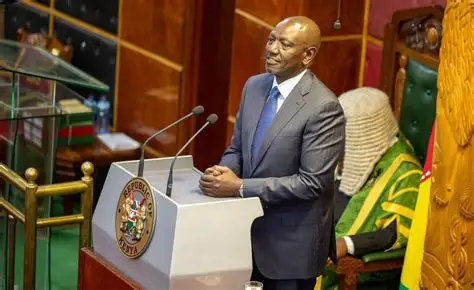
Presidents William Ruto and Yoweri Museveni have officially launched the extension of the Standard Gauge Railway (SGR), a major infrastructure project set to transform trade, logistics, and regional integration across East Africa.
The project, unveiled in Kisumu, will extend the railway from western Kenya to Malaba, forming a critical link between Kenya and Uganda while opening trade corridors to the wider East and Central African region.
A Strategic Boost for Regional Trade and Logistics
The SGR extension is expected to significantly reduce transport costs and transit times, addressing one of the biggest constraints to economic growth in the region. Currently, cargo movement between Kenya and Uganda can take up to 100 hours, limiting efficiency and competitiveness.
By improving rail connectivity from the port of Mombasa through inland trade hubs, the project will enhance supply chain efficiency, facilitate faster cargo movement, and strengthen cross-border trade. The railway is also expected to support landlocked economies such as Rwanda, Burundi, and the Democratic Republic of Congo, which depend heavily on regional transport corridors for access to global markets.

Driving Industrial Growth and Economic Development
President Ruto highlighted that the Mombasa–Malaba corridor will play a central role in driving industrialisation, with planned development of special economic zones and logistics hubs in key locations such as Kisumu and Busia. Improved infrastructure is expected to attract investment, support manufacturing, and create new economic opportunities across the region.
He also pointed to the historical importance of railway networks in shaping East Africa’s economic landscape, noting how earlier rail systems contributed to the growth of cities such as Nairobi and Kisumu. The current expansion, he said, represents a continuation of that vision for regional connectivity and economic transformation.
Uganda’s Expansion Plans Strengthen Regional Network
President Museveni confirmed that Uganda is advancing its own railway projects, including the Malaba–Kampala section, with further extensions planned to Kasese and onward to the Democratic Republic of Congo. Additional routes linking to South Sudan and Rwanda are also under development, reinforcing efforts to build an integrated regional rail network.
Overcoming Financing Challenges
While the SGR has already connected Mombasa to Nairobi and Naivasha, earlier plans to extend the railway stalled due to financing constraints after China declined to fund additional phases. The latest development signals renewed commitment by both Kenya and Uganda to move the project forward despite these challenges.
A Game Changer for Landlocked Economies
The SGR extension is particularly significant for East and Central Africa’s landlocked countries, where high logistics costs continue to inflate the price of goods and limit trade competitiveness. By providing a faster and more efficient link to the Indian Ocean, the railway is expected to reduce trade barriers, improve market access, and strengthen regional economic integration.
Conclusion
The launch of the SGR extension marks a critical step toward transforming East Africa’s trade infrastructure. As Kenya and Uganda push forward with the project, the railway is poised to become a key driver of regional trade, industrial growth, and long-term economic development.