


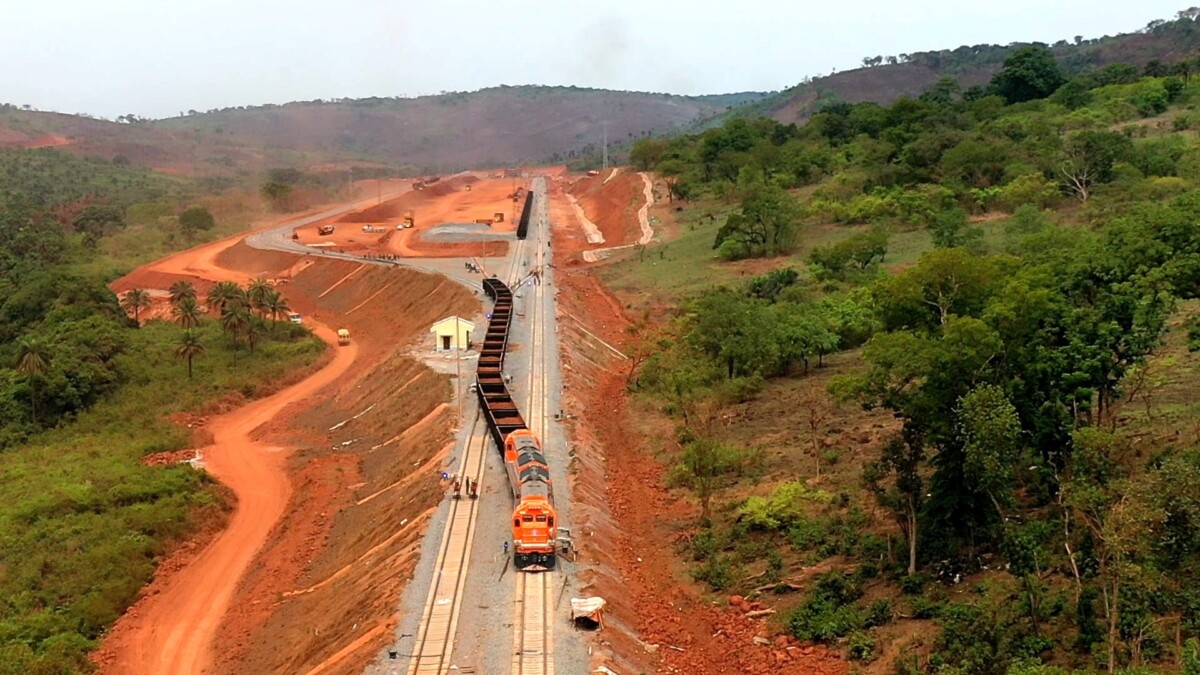
Guinea has become a major driver of Africa’s export growth to China, with its bauxite shipments to the Asian market nearly quadrupling between 2018 and 2025 as the country strengthens its position in the global aluminium supply chain.
Chinese imports of Guinean aluminium ores and concentrates, consisting almost entirely of bauxite, increased from 38.2 million tonnes in 2018 to approximately 149.5 million tonnes in 2025.
The surge has reinforced Guinea’s importance as a key supplier to China’s aluminium industry, while the West African country is pursuing plans to expand domestic alumina refining and capture more value from its mineral resources.
Trade figures show that Guinea and the Democratic Republic of Congo (DRC) have been central to Africa’s export growth to China. Between 2018 and 2025, the two countries added US$25.77 billion to Chinese imports from the continent, exceeding Africa’s overall net increase of US$23.74 billion.
Their combined contribution represented 108.6% of the continent’s net export growth over the period.

China’s imports from Africa increased from US$99.28 billion in 2018 to US$123.02 billion in 2025. Guinea’s exports rose from US$2.20 billion to US$12 billion, adding US$9.80 billion to the total.
In 2025 alone, Guinea accounted for US$4.36 billion of the US$6.22 billion increase in China’s imports from Africa.
By contrast, imports from the rest of Africa, excluding Guinea and the DRC, declined by 2.2%, from US$91.42 billion to US$89.39 billion. The figures highlight how heavily the continent’s overall export gains have depended on these two mineral-producing countries.
Guinea advances alumina refining ambitions
Alongside its growing bauxite exports, Guinea is seeking to expand its domestic processing capacity and move further up the aluminium value chain.
The country currently has one operating alumina refinery, RUSAL’s Friguia facility, which has an installed annual capacity of 600,000 tonnes but operates below that level.
Three Chinese-led alumina refinery projects are under construction.
SPIC’s refinery at Boffa began construction in March 2025, followed by Winning Consortium Alumina Guinea’s project at Dobali in December 2025. Both facilities are designed to produce 1.2 million tonnes of alumina annually.
CHALCO began construction of its refinery at Boffa in June 2026, with a core investment of approximately US$1 billion.
Guinea’s Minister of Mines and Geology, Bouna Sylla, has put the combined planned capacity of the three projects at 4.8 million tonnes and set a target of establishing five refineries by 2030.
If completed, the projects would significantly expand Guinea’s domestic alumina processing industry and reduce its reliance on exporting unprocessed bauxite.
GAC settlement reinforces push for local processing
Guinea’s ambition to develop its refining industry has also influenced its relationship with Emirates Global Aluminium (EGA).
In 2025, the government withdrew the mining concession of Guinea Alumina Corporation (GAC), an EGA subsidiary, citing the company’s failure to meet local processing commitments.
The assets were subsequently transferred to state-owned Nimba Mining Company. A mining agreement signed in August 2026 also provides for the development of an alumina refinery.
The move reflects the government’s broader effort to link access to its mineral resources with investment in domestic processing capacity.
With China remaining the dominant destination for Guinean bauxite, the development of new refineries could help the country capture more value from its mineral wealth while strengthening its position in the global aluminium industry.
The extent to which these ambitions are realised will depend on the completion of the planned projects and Guinea’s ability to translate its growing export volumes into a more developed domestic processing sector.