


Kobeli says he wants to reduce this dependence and build the capacity to manage the entire production process locally, from raw cotton to finished garments.
The challenge is that the different stages of the value chain are not sufficiently connected, leaving African manufacturers dependent on imported materials and expertise.
Lesotho’s textile industry faces external pressures
Textiles and apparel are among Lesotho’s most important industries, making the country one of the major beneficiaries of the African Growth and Opportunity Act (AGOA), which provides eligible African countries with preferential access to the US market.
Lesotho has consistently ranked among sub-Saharan Africa’s leading apparel exporters to the United States. Its apparel exports reached $237.3 million in 2024.

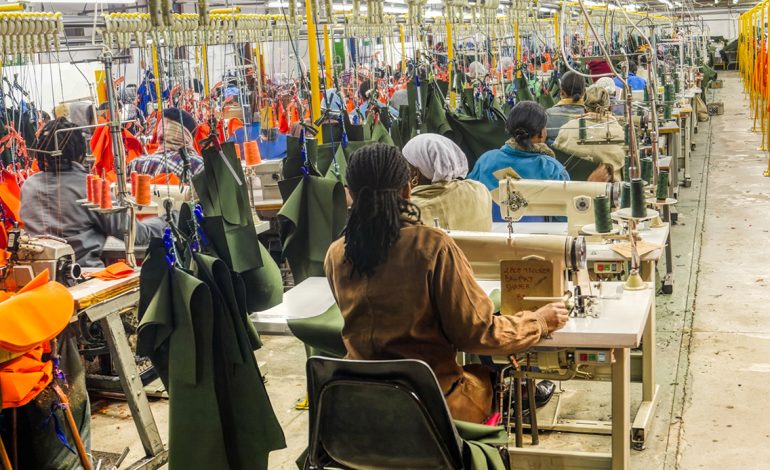
Manufacturing, particularly textiles and footwear, is the country’s second-largest employer after the state, providing an important source of jobs in a nation of approximately 2.4 million people.
However, the sector has faced repeated disruptions. Factory shutdowns during the Covid-19 pandemic in 2020 resulted in job losses, with the industry only beginning to recover in 2021.
More recently, US President Donald Trump’s so-called Liberation Day tariffs initially imposed a 50% tariff on Lesotho’s exports, among the highest rates announced at the time. The rate was subsequently reduced to 15%, but the uncertainty still affected the country’s economic outlook and prompted its central bank to lower growth projections for 2025 and 2026.
Kobeli believes these experiences demonstrate the risks of relying heavily on foreign-owned factories and a single export market.
He estimates that only around 20% of manufacturing activity in Lesotho takes place locally, with higher-value functions such as merchandising, design and fabric development largely undertaken in Asia.
He also argues that many foreign investors have focused on operating costs and wages rather than making long-term investments that would deepen local industrial capacity.
Building African-owned manufacturing capacity
Kobeli believes African governments need to provide stronger support for domestic entrepreneurs instead of concentrating incentives primarily on attracting foreign investors.
He points to China’s manufacturing model, which includes support for exporters and incentives such as rebates to help manufacturers remain competitive.
For African-owned businesses to expand, he says they need better access to trade finance and structured incentives that make it easier to acquire machinery and raw materials.
He also believes manufacturers should prioritise domestic and regional markets before attempting to compete globally.
Following uncertainty in the US market, Lesotho has been increasing exports to neighbouring South Africa while exploring additional markets across the continent. Kobeli sees this diversification as an opportunity to build a more resilient industry around African demand.
“We can produce for ourselves first,” he said. “The opportunity is already there for Africans to take care of their own people.”
Regional value chains could create jobs
Kobeli argues that developing integrated textile and apparel value chains could create large-scale employment while retaining more economic value within African countries.
Rather than exporting raw cotton and importing finished products, countries could coordinate investment across farming, ginning, spinning, fabric production and garment manufacturing.
Such an approach would require cooperation between governments, cotton producers, processors, manufacturers and financial institutions to address gaps in infrastructure, finance and production capacity.
Lesotho’s experience demonstrates the employment potential of apparel manufacturing, but Kobeli believes the next stage must focus on building locally owned businesses capable of investing for the long term.
With clothing remaining a basic consumer necessity, he sees opportunities for African manufacturers to serve growing domestic and regional markets while developing the industrial capabilities needed to compete internationally.