


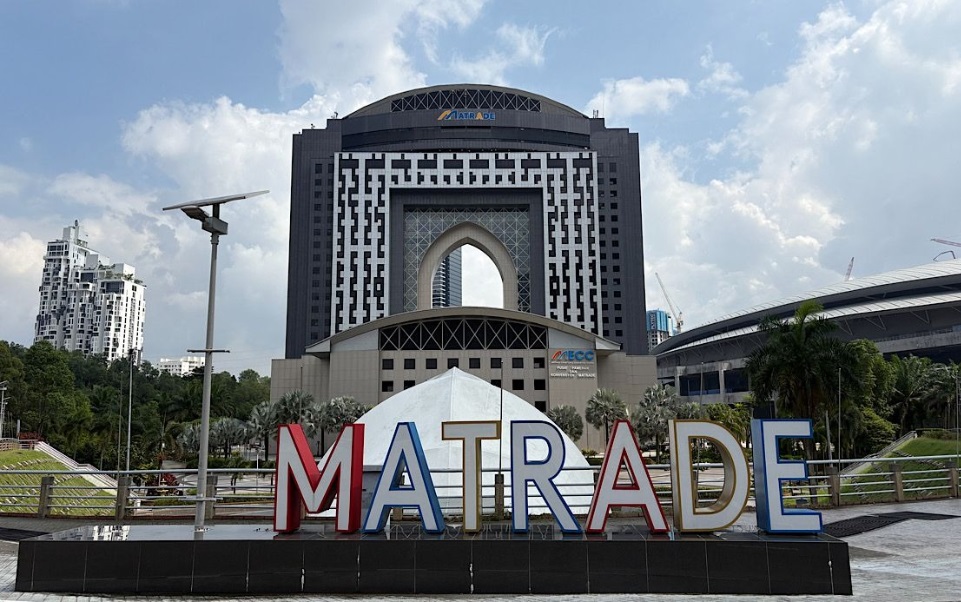
Malaysia is stepping up efforts to expand its export markets across Africa, Latin America and Central Asia as global trade uncertainties, rising tariffs and geopolitical tensions create challenges for exporters and manufacturers.
The Malaysia External Trade Development Corporation (MATRADE) is prioritising market diversification to reduce dependence on traditional destinations and create new opportunities for Malaysian businesses, including furniture manufacturers and other industries.
MATRADE Senior Director of Strategic Planning Raja Badrulnizam Raja Kamalzaman said approximately 70% of Malaysia’s exports are concentrated in 10 markets, mainly the European Union, the United States, Japan and other Asian countries.
He said the concentration exposed exporters to external economic disruptions, making it increasingly important to explore alternative markets.
With 47 offices worldwide, MATRADE is working to identify new commercial opportunities, particularly across Africa, Latin America and Central Asia.

The strategy is already showing potential in the furniture industry. Between January and September 2026, Malaysian furniture exports to several alternative markets exceeded their corresponding 2025 benchmarks.
Türkiye recorded growth of 42% to RM83 million, while exports to New Zealand increased by 68% to RM69.7 million. Shipments to Mexico rose 56% to RM39.4 million, Chile grew 37% to RM32.8 million, and Kenya recorded a 41% increase to RM14.5 million.
Raja Badrulnizam said the growth indicated increasing demand for Malaysian furniture products in emerging markets, with MATRADE providing platforms to connect exporters with international buyers.
Africa presents opportunities for Malaysian exporters
Kenya’s 41% increase in Malaysian furniture imports highlights the potential for stronger commercial relations between Malaysian manufacturers and African markets.
MATRADE’s broader diversification strategy is expected to encourage more Malaysian businesses to explore opportunities across the continent, where expanding consumer markets and investment activities could support demand for manufactured products.
The agency is also seeking to position Malaysian companies as alternative suppliers to markets experiencing logistical disruptions.
Raja Badrulnizam said the conflict in West Asia could create additional opportunities through reconstruction demand for furniture and other products.
MATRADE offices in Jeddah, Dubai and Egypt are exploring opportunities to connect Malaysian exporters with buyers facing supply constraints.
He said the agency had presented these opportunities to Malaysia’s National Economic Action Council, highlighting the potential for Malaysian manufacturers to serve markets that could no longer obtain supplies through traditional West Asian trading routes.
US tariff uncertainty drives market diversification
Despite the expansion into alternative markets, the United States remains an important destination for Malaysian furniture manufacturers.
However, furniture exports to the US declined by 19.2% to RM3.77 billion between January and September 2026, amid growing concerns over tariff uncertainty.
Raja Badrulnizam noted that the US remained a major net importer of furniture, recording a trade deficit of US$32.2 billion, while global furniture imports exceeded US$38.4 billion between January and August 2026.
He said changing international sourcing patterns could create opportunities for Malaysian manufacturers as American buyers seek alternatives to Chinese suppliers amid tariff pressures.
Vietnam and Mexico currently hold the largest shares of the US furniture market, at 22.3% and 21.3%, respectively. China’s share has declined to 18.6%, placing it third, while Malaysia ranks ninth with a 2.3% share.
Raja Badrulnizam said Malaysia must continue strengthening its presence in established markets while expanding into free trade agreement partner countries and emerging regions.
He emphasised that reliance on a limited number of export destinations had become a significant risk for Malaysian businesses.
Global furniture demand offers further growth potential
MATRADE expects the global furniture market to grow by approximately 4% to 5% annually over the next five years, creating further opportunities for Malaysian manufacturers.
However, exporters continue to face challenges from higher production costs, expensive logistics and rising raw material prices. Raja Badrulnizam said industry players had adapted to the changing environment despite these pressures.
MATRADE plans to continue promoting Malaysian products across different sectors in new international markets in 2027.
The agency is also encouraging more businesses to participate in international trade missions, exhibitions and furniture fairs to strengthen commercial relationships and expand access to overseas buyers.
The strategy forms part of Malaysia’s wider effort to diversify export destinations, reduce exposure to global trade disruptions and establish its manufacturers as competitive suppliers in emerging markets, including Africa.