


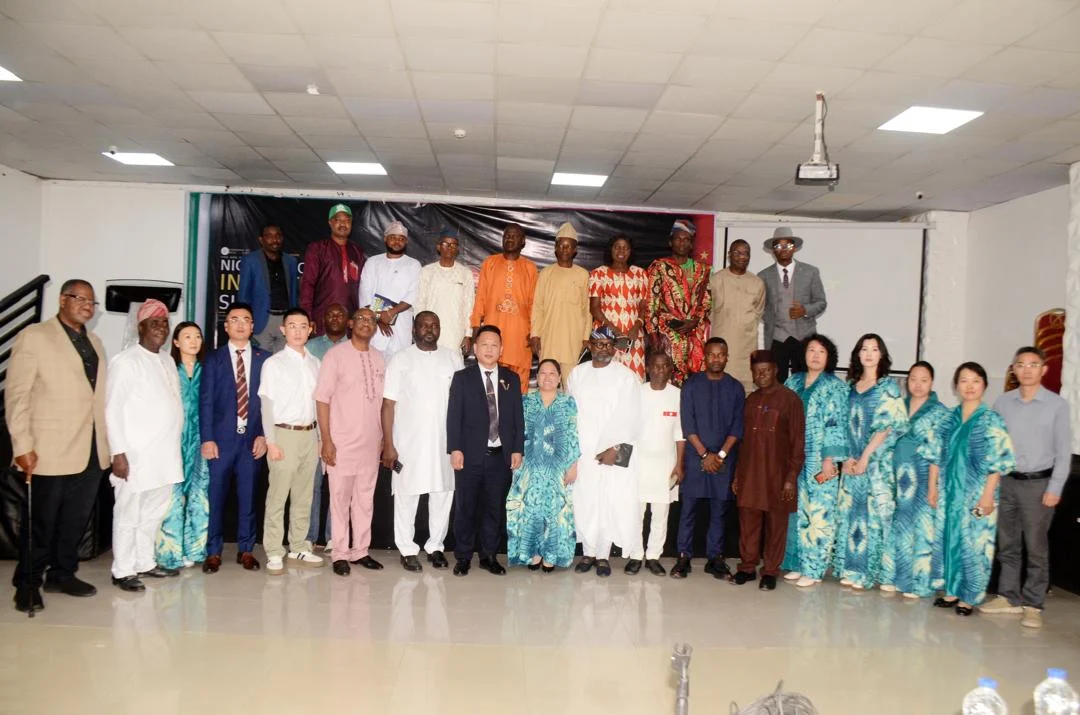
Nigeria and China have reaffirmed their commitment to expanding bilateral trade and investment, with both countries identifying exports, energy, agriculture, manufacturing and emerging technologies as priority sectors for deeper collaboration.
The renewed commitment was announced during the Nigeria-China Investment Summit 2026 in Lagos, where business leaders and investment organisations explored opportunities to accelerate private sector-led investment and industrial development.
Investment Focuses on Key Economic Sectors
Organised by the Nigeria-China Investment Club (NCIC), the summit brought together Nigerian businesses and Chinese investment organisations to strengthen economic cooperation under the theme of promoting industrialisation, job creation and sustainable economic growth.
According to NCIC President Dr Chidi Uleli, the partnership aims to attract investment into strategic sectors including agriculture, renewable energy, healthcare, infrastructure, digital payment systems and frontier artificial intelligence.

He said the initiative is intended to move beyond dialogue by facilitating practical investment projects and expanding trade between businesses in both countries.
Private Sector-Led Collaboration
Uleli said the collaboration with the China International Business Development Committee (CIBDC) is designed to reduce bureaucratic barriers and create faster opportunities for businesses seeking to expand across both markets.
He added that the partnership could open access to China’s vast consumer market while supporting investments that strengthen Nigeria’s industrial base, improve infrastructure and stimulate economic development.
The summit also highlighted opportunities to increase Nigerian exports by connecting local producers with Chinese buyers through structured trade and investment platforms.
Chinese Investors Target Industrial Development
Executive Chairman of the China Association for International Economic Cooperation, Sarah Lee, described Nigeria as one of Africa’s most promising investment destinations.
She said Chinese investors are exploring opportunities to establish industries across agriculture, infrastructure, healthcare, construction, education and renewable energy.
According to Lee, combining Chinese technology, equipment and industrial expertise with Nigeria’s economic potential could support the development of factories, industrial parks, healthcare facilities and educational institutions while creating employment and increasing government revenue.
Technology Transfer and Energy Remain Priorities
Stakeholders also identified technology transfer as a critical component of the growing partnership.
Solomon Iwu-Ejike, Director of Carbonex and a partner of the Nigeria-China Investment Club, called for greater collaboration to strengthen Nigeria’s manufacturing capacity through access to Chinese production technologies and industrial expertise.
He also emphasised the importance of increased investment in Nigeria’s electricity sector to improve power reliability and affordability, while encouraging stronger quality standards for imported goods.
Strengthening Long-Term Economic Cooperation
Discussions during the summit covered a broad range of sectors, including export promotion, renewable energy, manufacturing, artificial intelligence, healthcare and infrastructure development.
Both Nigerian and Chinese stakeholders expressed confidence that stronger private sector partnerships will support industrialisation, expand trade opportunities and contribute to long-term economic growth in both countries.