


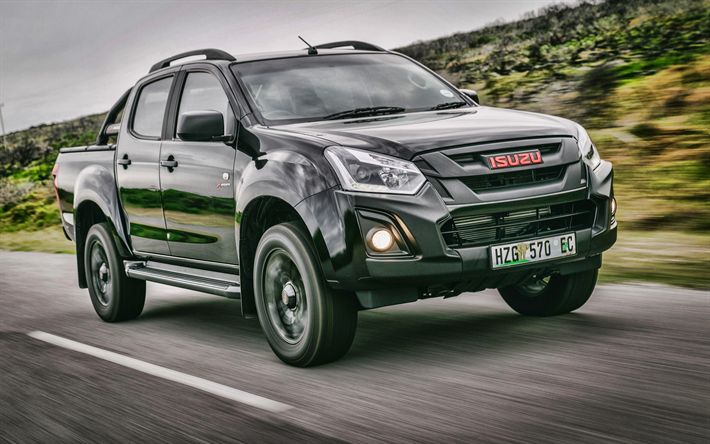
Automotive Giant Expands Local Supply Chain Through New D-MAX Production Programme
Isuzu Motors South Africa (IMSAf) has announced a R510 million investment in local vehicle manufacturing, reinforcing its commitment to South Africa’s automotive sector while creating jobs and expanding domestic production capabilities.
The investment forms part of the development programme for the latest Isuzu D-MAX and has been directed towards supplier tooling, manufacturing infrastructure and localisation initiatives aimed at strengthening the company’s South African supply chain.
The move highlights growing confidence in the country’s automotive manufacturing industry despite increasing competition from imported vehicles, particularly from rapidly expanding Chinese brands.
Investment Supports Local Suppliers and Manufacturing Growth

According to Isuzu Motors South Africa, the funding enabled local suppliers to expand production capacity, improve manufacturing capabilities and meet the company’s global quality standards.
As part of the programme, 729 vendor tools were developed across Isuzu’s supplier network to support the production of 250 locally sourced components used in the new D-MAX range.
The investment is expected to strengthen South Africa’s automotive value chain by increasing local content and reducing reliance on imported vehicle components.
By supporting local suppliers, the initiative also contributes to broader industrial development and skills growth within the manufacturing sector.
New Manufacturing Jobs Created Through Localisation Drive
The investment has already generated employment opportunities within the automotive supply chain.
Vehicle component manufacturer VSL Manufacturing created 52 new jobs to support the production of large pressed skin panels for the Isuzu D-MAX. A further 34 jobs were created at supplier Praga, which manufactures chassis components used in vehicle assembly.
The job creation forms part of a broader strategy to deepen localisation and strengthen domestic manufacturing capabilities.
Industry analysts note that increased localisation often leads to wider economic benefits by supporting supplier development, creating skilled employment and encouraging technology transfer across industrial sectors.
Localisation Strengthens Skills Development in South Africa
Isuzu says localisation is about more than simply producing components domestically. It also plays a critical role in building long-term industrial expertise and improving manufacturing competitiveness.
According to Komane Pitso, Executive Vice President for Procurement and Logistics at Isuzu Motors South Africa, local suppliers gain direct exposure to world-class automotive manufacturing standards through the localisation process.
This includes training and knowledge transfer in areas such as quality management, process control, tooling development, dimensional validation and production readiness.
Pitso noted that the collaboration between South African suppliers and international manufacturing partners helps develop sustainable industrial capabilities while raising production standards across the automotive sector.
The localisation programme has resulted in 250 D-MAX components now being produced locally, representing a significant increase compared with previous vehicle programmes.
Isuzu Expands Commitment to South Africa’s Automotive Industry
The latest investment forms part of Isuzu’s broader strategy to strengthen local manufacturing, support small and medium-sized enterprises (SMEs) and contribute to the long-term growth of South Africa’s automotive industry.
The company has repeatedly emphasised the importance of maintaining a competitive domestic manufacturing base while increasing opportunities for local suppliers to participate in global automotive value chains.
Automotive manufacturing remains one of South Africa’s most important industrial sectors, contributing significantly to exports, employment and economic growth.
Investments in localisation are increasingly viewed as essential for maintaining the industry’s competitiveness in an evolving global market.
Rising Competition from Chinese Vehicle Brands Presents New Challenges
While Isuzu’s investment has been welcomed as a positive development for local manufacturing, the company faces growing competition from Chinese automotive brands that continue to gain market share in South Africa.
Recent industry reports indicate that Chinese vehicle manufacturers accounted for approximately 17% of new passenger vehicle sales in South Africa during 2025, reflecting a dramatic shift in consumer preferences and market dynamics.
The rapid growth of Chinese brands has been driven by competitive pricing, expanding dealership networks and increasingly sophisticated vehicle offerings.
This trend has intensified competition for established manufacturers operating in the country, including long-standing brands such as Isuzu.
Can Local Manufacturing Provide a Competitive Advantage?
As competition in the South African automotive market continues to increase, manufacturers are placing greater emphasis on localisation, efficiency and supply-chain resilience.
Industry experts argue that local production can provide several advantages, including shorter supply chains, greater responsiveness to market demand and stronger relationships with domestic suppliers.
For Isuzu, the R510 million investment represents a strategic effort to strengthen these advantages while building a more sustainable manufacturing ecosystem within South Africa.
The success of the initiative will ultimately depend on the company’s ability to balance production costs, maintain quality standards and compete effectively against a growing number of international rivals.
Isuzu Bets on Local Production for Future Growth
The investment in supplier development, manufacturing infrastructure and job creation signals Isuzu’s long-term confidence in South Africa as a vehicle production hub.
By increasing local content in the D-MAX and strengthening relationships with domestic suppliers, the company is positioning itself to benefit from future growth opportunities in both local and export markets.
As South Africa’s automotive sector adapts to changing consumer trends and intensifying global competition, investments such as Isuzu’s could play a crucial role in supporting industrial development, preserving jobs and strengthening the country’s manufacturing base.
Whether the strategy delivers long-term competitive advantages remains to be seen, but for now, the investment represents a significant boost for South African automotive manufacturing and local supplier development.