


Africa’s largest copper mining complex has successfully completed its first Europe-bound shipment through the Lobito Corridor, marking a major milestone for African mineral exports and regional trade infrastructure.
Copper anodes produced at the Kamoa-Kakula Copper Complex in the Democratic Republic of Congo (DRC) recently arrived in Belgium, where they were refined into more than 99.99% pure London Metal Exchange (LME) Grade A copper cathodes. The successful delivery demonstrates the growing importance of the Lobito Corridor as an alternative export route for Central Africa’s mineral wealth and highlights the region’s increasing role in global supply chains.
Lobito Corridor Strengthens Africa’s Access to Global Markets
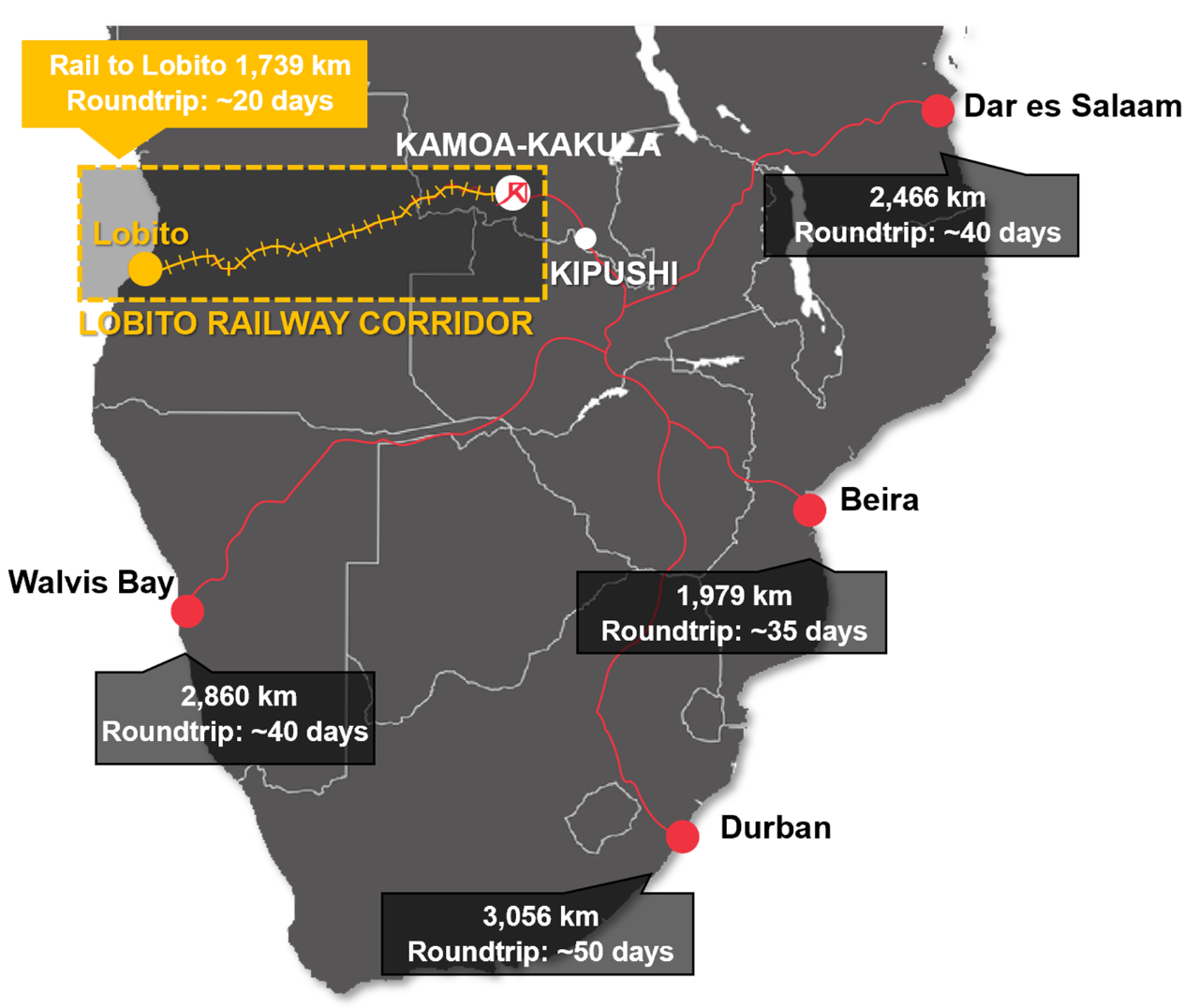
The shipment builds on an earlier breakthrough when Kamoa-Kakula became one of the first major mining operations to transport copper through the Lobito Corridor. Connecting the mineral-rich Copperbelt regions of the DRC and Zambia to Angola’s Port of Lobito on the Atlantic coast, the railway network is designed to reduce transport times and improve access to international markets.
The arrival of the copper shipment in Europe confirms the corridor’s commercial viability and demonstrates its potential to transform how minerals from Central Africa reach global buyers. The route is increasingly being viewed as a strategic alternative to traditional export corridors that often face congestion, delays and higher transportation costs.

Sustainable Copper Supply Chain Gains Global Attention
According to Ivanhoe Mines, the copper was mined, processed, transported and refined using a supply chain powered largely by renewable energy sources. The company says the shipment represents one of the lowest carbon-intensive refined copper supply chains in the world, a significant advantage as manufacturers and governments seek cleaner sources of critical minerals.
The refined copper cathodes produced in Belgium are essential for a wide range of industries, including electric vehicles, renewable energy systems, battery storage technologies and electricity transmission infrastructure. As demand for these sectors continues to rise, the importance of reliable and sustainable copper supply chains is expected to grow significantly.
Rising Copper Demand Places Africa at the Centre of the Energy Transition
Global demand for copper has surged in recent years as countries accelerate investments in clean energy and electrification. The metal plays a critical role in electric vehicle production, renewable energy projects and modern power grids, making it one of the most sought-after commodities in the global economy.
This growing demand has elevated the strategic importance of the Democratic Republic of Congo, which is already one of the world’s leading producers of copper and cobalt. Improved export infrastructure such as the Lobito Corridor is expected to strengthen the country’s position in international markets while supporting broader economic development across the region.
International Investment Accelerates Lobito Corridor Development
The Lobito Corridor has attracted significant backing from governments and development partners seeking to improve access to critical minerals required for the global energy transition. Supported by investments from the United States, the European Union, Angola, Zambia and the DRC, the project is increasingly viewed as one of Africa’s most important infrastructure developments.
Beyond improving logistics, the corridor is expected to encourage new mining investments, strengthen regional trade integration and create opportunities for greater value addition within Africa’s mineral sector.
Ivanhoe Mines Expands Its Influence in African Mining
The successful Europe-bound shipment further reinforces Ivanhoe Mines’ position as a major player in Africa’s mining industry. Through the Kamoa-Kakula Copper Complex, the company operates one of the world’s highest-grade and fastest-growing copper operations.
In addition to its copper assets, Ivanhoe maintains interests in the Kipushi zinc mine in the DRC and the Platreef platinum-group metals project in South Africa. These projects provide exposure to several critical minerals expected to play a key role in the global shift toward cleaner energy technologies.
A New Chapter for African Mineral Exports
The successful delivery of Kamoa-Kakula copper to Europe represents more than a logistics achievement. It highlights the growing potential of African-led infrastructure projects to reshape trade flows, improve export competitiveness and strengthen the continent’s role in global supply chains.
As investment in the Lobito Corridor continues to expand, the route is expected to become an increasingly important gateway for copper, cobalt and other strategic minerals destined for international markets. For Africa’s mining sector, the achievement signals the beginning of a new era in mineral exports and regional economic integration.