


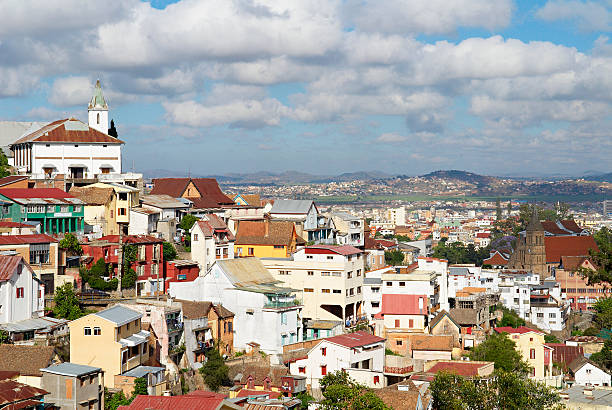
Madagascar, Antananarivo, cityscape – stock photo. Getty Images
Madagascar has taken a decisive step to reset its mining sector, lifting a 16-year moratorium on new mining permits for most minerals while maintaining restrictions on gold. The move signals a strategic effort to unlock investment, job creation, and industrial growth in an economy shaped by one of Africa’s youngest populations.
The government announced that the suspension on new mining licences—imposed in 2010 to reform governance and strengthen the legal framework—has now been lifted for all minerals except gold, reopening the sector to fresh exploration and project development.
Mining as a Growth Lever for a Young Nation
With a rapidly expanding and youthful population, Madagascar faces mounting pressure to generate employment, skills, and sustainable economic pathways. Mining already plays a central role in the economy, with exports including nickel, cobalt, graphite, and ilmenite—minerals that are increasingly critical to global clean-energy, battery, and manufacturing supply chains.

Speaking in Antananarivo, Mines Minister Carl Andriamparany framed the policy shift as a practical necessity.
“A mining permit is an essential working tool that allows operators and investors to operate legally,” he said. “That is why we have decided to lift the suspension on issuing permits.”
According to the latest Extractive Industries Transparency Initiative (EITI) report published at the end of 2025, approximately 1,650 mining permit applications were pending as of 2023. Clearing this backlog is expected to accelerate project timelines, attract capital, and expand formal employment—particularly for young Malagasy workers entering the labour market.
Why Gold Remains Off-Limits
While most minerals are now eligible for new permits, the government has deliberately maintained the moratorium on gold mining. Authorities cite persistent regulatory challenges, especially the disconnect between declared production and widespread artisanal mining.
Official data shows that just over 13 kilograms of gold were formally declared last year—a figure the government describes as negligible given the scale of informal activity nationwide.
“In light of this situation, the government has acknowledged our current inability to effectively regulate the sector and establish a rigorous monitoring system,” Andriamparany said, signalling a preference for tighter control over short-term revenue gains.
Flagship Assets and Investor Confidence
Madagascar’s mining strategy continues to be anchored by large-scale operations such as the Ambatovy Mine, one of the country’s largest sources of foreign exchange and a cornerstone of its industrial mining base.
Officials say reopening permits is intended to complement these flagship projects by encouraging exploration, diversification, and downstream activity—reducing reliance on a narrow set of mega-investments.
The timing also aligns with rising global demand for battery and industrial minerals, creating an opportunity for Madagascar to reposition itself more competitively within international supply chains.
A Controlled Reset, Not Deregulation
Crucially, the government has framed the policy change as a regulated reopening, not a free-for-all. By excluding gold and openly acknowledging regulatory limitations, authorities are signalling a more disciplined, long-term approach to resource development.
For a country where the majority of citizens are under 25, mining policy has become about more than exports or foreign investment. It is increasingly tied to whether Madagascar can convert natural resource wealth into jobs, skills, and durable economic momentum for a young generation seeking opportunity at home.