


Morocco has overtaken South Africa to become Africa’s fourth-most attractive investment destination, supported by industrial expansion, export diversification and sustained investment in infrastructure, according to Rand Merchant Bank’s (RMB) latest Where to Invest in Africa report.
The 2026/27 ranking places Morocco behind Seychelles, Mauritius and Egypt, which retained the top three positions for the third consecutive year. South Africa dropped from fourth to fifth, while Côte d’Ivoire climbed to seventh and Nigeria improved to 11th.
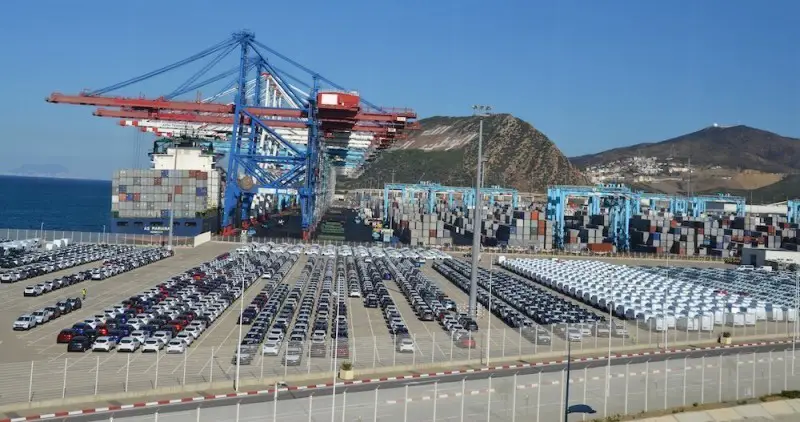
Morocco’s growing manufacturing sector has played a significant role in its rise, particularly through automotive production and exports. The country produced 501,965 vehicles in 2025, accounting for 40.8% of Africa’s total vehicle production, according to figures cited in the report.
Automotive and component exports reached a record MAD 157.6 billion ($16.02 billion) in 2024, increasing 6.3% year on year and making the sector Morocco’s largest export earner. However, vehicle production declined by 11.5% in 2025 compared with its 2024 peak.
Economic Growth and Infrastructure Support Morocco’s Rise

Morocco’s broader economic performance has also strengthened its investment appeal. Its economy grew by 4.9% in 2025, compared with 1.1% in South Africa. Inflation remained below 3% in Morocco from 2024 through mid-2026, while South Africa recorded average inflation of 5% over the five years to June 2026.
In September 2025, Morocco regained an investment-grade sovereign credit rating from S&P Global Ratings, reflecting the agency’s assessment of the country’s economic outlook and progress on reforms.
The RMB report acknowledged that South Africa retained important investment advantages, including deep financial markets, improving energy security and ongoing economic reforms. South Africa’s nominal gross domestic product also exceeded $400 billion in 2025, making its economy more than twice the size of Morocco’s.
However, persistent electricity and logistics challenges have affected South Africa’s industrial and export competitiveness. Morocco, meanwhile, has continued to develop its manufacturing capacity and broaden its export base.
Foreign Investment Reaches Record Levels
Morocco’s investment performance has been reflected in rising foreign direct investment (FDI). The country attracted a record MAD 56.1 billion ($5.70 billion) in FDI in 2025, representing a 22% increase on the previous peak recorded in 2018.
Government-approved investment projects have also expanded across several industries.
In April 2026, Morocco’s National Investment Commission approved 44 projects worth a combined MAD 86.36 billion ($8.77 billion). The projects are expected to generate nearly 20,500 jobs, comprising approximately 9,000 direct and 11,500 indirect positions.
The investments cover 18 sectors, including automotive manufacturing, tourism, renewable energy, airport infrastructure, food processing and aerospace. Automotive manufacturing accounts for the largest share of anticipated employment, at 38%.
In July, the commission approved a further 29 investment agreements worth nearly MAD 42 billion ($4.27 billion). These projects are expected to create approximately 9,800 jobs, including 2,400 direct positions, across 13 sectors. Planned investments include port infrastructure, aerospace, logistics, telecommunications, food processing and renewable energy.
Investment Charter Supports Long-Term Growth
Morocco’s investment charter has become a central part of the government’s efforts to attract private capital and encourage job creation.
Since becoming operational in March 2023, the charter has resulted in 391 signed investment agreements worth a combined MAD 520 billion ($52.87 billion), according to government figures.
The agreements reflect Morocco’s strategy to strengthen industrial production, attract investment into emerging sectors and expand employment opportunities.
Its improved position in the RMB ranking highlights the growing competition among African economies for international capital. Morocco’s manufacturing expansion, export growth and investment pipeline have strengthened its standing, while South Africa continues to draw on its larger economy and established financial markets.
For African investors and businesses, the rankings highlight the importance of industrial capacity, infrastructure, economic stability and diversified exports in attracting investment and building long-term competitiveness.