


South Africa has removed 13 construction companies from the Construction Industry Development Board’s (cidb) National Register of Contractors following findings that they misrepresented information in applications to upgrade their registration grades.
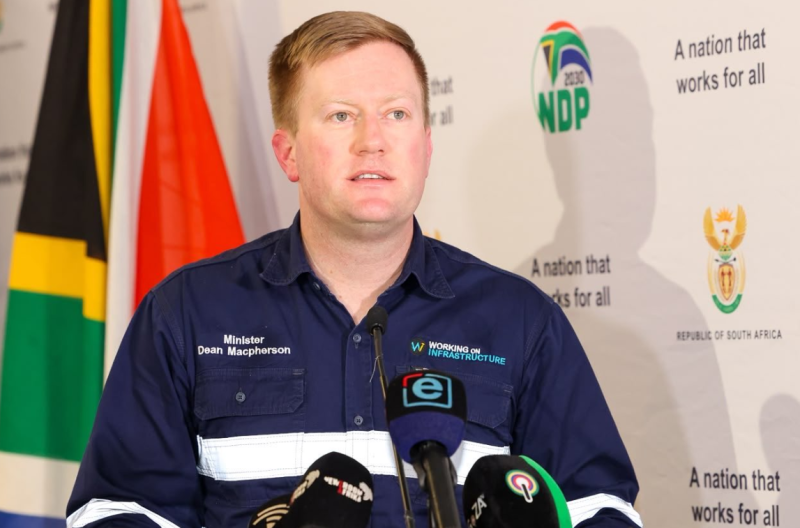
The decision, announced by Public Works and Infrastructure Minister Dean Macpherson on 27 October 2026, brings the total number of contractors removed and blacklisted since June 2024 to more than 75, compared with just one between 2002 and June 2024, according to the department.
The latest removals followed a cidb Board resolution adopted on 15 October under sections 19(1) and 19(2) of the Construction Industry Development Board Act of 2000. These provisions allow the board to remove contractors who breach registration conditions or obtain grading classifications through misrepresentation.
The 13 companies are RTZ Construction and Projects, Shumani Development, Magagamela Trade and Projects, Exxeding Grace, Yem Yem Projects and Plant Hire, BBM Khanye Holdings, Lethabo Africa Engineering, TMR Industrial Solutions, Moriel Infrastructure Group, Salinkata Trading, King Tar Construction, Batho Vanhu Construction and Ithembalenkosi.
The companies held registration grades ranging from Grade 1 to Grade 9 across various construction categories.
Tighter Checks on Contractor Registration

The cidb grading system evaluates contractors according to their financial capacity and track record, helping determine the size and complexity of projects they are qualified to undertake.
The department said misrepresentation undermines the credibility of the register, disadvantages compliant businesses and creates risks for public infrastructure projects if contracts are awarded to companies that lack the capacity they claim to possess.
As part of wider reforms, the cidb is introducing additional audits and verification measures for higher-risk applications, particularly those seeking higher grading classifications. These measures include checking information directly with banks, public-sector clients and other relevant institutions rather than relying exclusively on documents submitted by applicants.
Cases involving established fraud or forgery may also be referred to law enforcement authorities, alongside administrative action.
The department is also seeking stronger compliance from public-sector clients with requirements to register construction projects with the cidb. Better reporting would help the board maintain a reliable national database of projects and contract awards, allowing claims made by contractors to be independently verified.
Government Emphasises Accountability
Macpherson said the removals reflected a change in the government’s approach to accountability in the construction industry. He added that a full audit of graded construction companies was underway.
He said the measures were intended to protect public funds, ensure contractors had the capabilities required to deliver infrastructure projects and create fairer competition for businesses that complied with registration requirements.
Cidb Board Chairperson Khulile Nzo said access to public procurement opportunities should depend on genuine capability and compliance with the rules. He warned that false information used to obtain grading levels could weaken confidence in the procurement system, disadvantage legitimate contractors and expose infrastructure clients to risk.
The Department of Public Works and Infrastructure said it would continue working with the cidb and law enforcement authorities to strengthen oversight and protect the integrity of public construction procurement.
The measures form part of efforts to ensure that government infrastructure spending supports service delivery, economic growth and job creation while contractors are held accountable for the information they submit.