


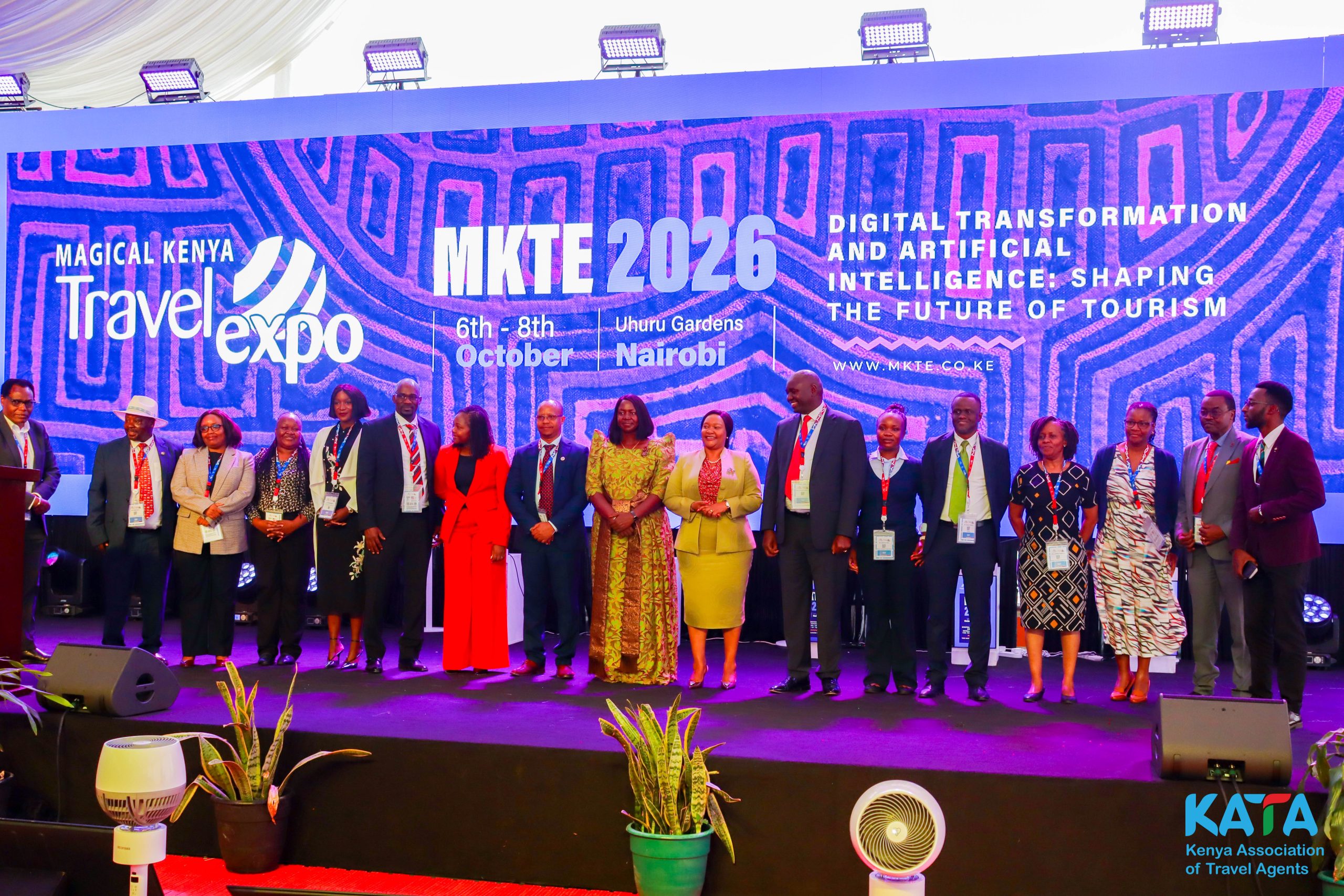
East Africa’s tourism industry is being urged to strengthen regional cooperation, embrace artificial intelligence and develop cross-border travel packages to attract international visitors and increase tourism revenue.
The message emerged at the opening of the 16th Magical Kenya Travel Expo (MKTE 2026), held under the theme Digital Transformation and Artificial Intelligence: Shaping the Future of Tourism. The event brought together more than 400 exhibitors and participants from over 40 countries at Uhuru Gardens in Nairobi, providing a platform for tourism businesses to establish partnerships and connect with international buyers.
Kenya’s Cabinet Secretary for Tourism and Wildlife, Rebecca Miano, highlighted the changing expectations of modern travellers, emphasising the need for the industry to adapt to evolving travel discovery and purchasing habits.
Artificial intelligence and digital platforms are reshaping how tourists research destinations, compare experiences and make bookings. For tourism businesses, the opportunity lies in using these technologies to improve visibility, convert enquiries into sales and encourage visitors to spend more time exploring the region.
However, technological innovation must go hand in hand with the conservation of natural and cultural attractions. Silvia Museiya, Principal Secretary in Kenya’s State Department for Wildlife, emphasised the importance of protecting the country’s wildlife, which underpins many of its tourism offerings. Ambassador Julius Bitok, Principal Secretary in the State Department for Tourism, also highlighted technology and artificial intelligence as important considerations for the sector’s future.

Cross-border tourism offers new opportunities
Regional integration emerged as another major theme, with Uganda’s State Minister for Tourism, Susan Nakawuki, calling for stronger cooperation between East African countries.
Nakawuki questioned why Kenyan travel sellers were outperforming Ugandan tour operators in selling gorilla tourism experiences, highlighting the importance of marketing, distribution networks and access to international customers.
She called for a borderless East African tourism offering that would make it easier for visitors to travel between countries, experience multiple attractions and potentially extend their stays.
Kenya’s wildlife reserves and coastal destinations could complement Uganda’s gorilla tourism, allowing operators to develop multi-country itineraries that appeal to travellers seeking a wider range of experiences during a single trip.
Realising this opportunity will require more than joint marketing. Reliable air and ground transport, efficient border procedures, coordinated tourism products and stronger partnerships between travel agents and tour operators will be essential to making cross-border travel convenient and commercially viable.
Nakawuki also raised concerns about the proportion of visitor spending that leaves the region, estimating that tourists could depart with 50% to 60% of the money they bring. Her remarks highlighted the importance of retaining more tourism expenditure within local economies through stronger domestic supply chains and greater participation by local businesses.
Travel agents and tour operators can play an important role by connecting accommodation providers, attractions and transport services across national borders, turning regional cooperation into bookable travel products.
Tourism trade creates commercial opportunities
The scale of activity at MKTE 2026 demonstrated the industry’s interest in expanding business connections. Kenya Tourism Board Chief Executive June Chepkemei reported that more than 10,000 business-to-business meetings took place on the first day.
The meetings brought tourism suppliers into contact with buyers and industry stakeholders from international markets, creating opportunities for partnerships, distribution agreements and future bookings.
However, the long-term value of the event will depend on whether these engagements translate into sustained business, increased visitor arrivals and higher tourism expenditure.
For East Africa, the priorities are closely connected. Digital marketing can help destinations reach new audiences, but accessible transport and integrated travel packages are needed to turn that interest into bookings. Similarly, regional attractions may generate greater commercial value when promoted as complementary experiences rather than competing destinations.
As international travellers increasingly seek diverse experiences and convenient travel arrangements, East Africa has an opportunity to strengthen its position by connecting its tourism assets across borders.
The discussions at MKTE 2026 underscored the need for the region to combine digital innovation with practical cooperation, sustainable tourism management and stronger commercial partnerships to increase visitor spending and spread the economic benefits of tourism across the region.