


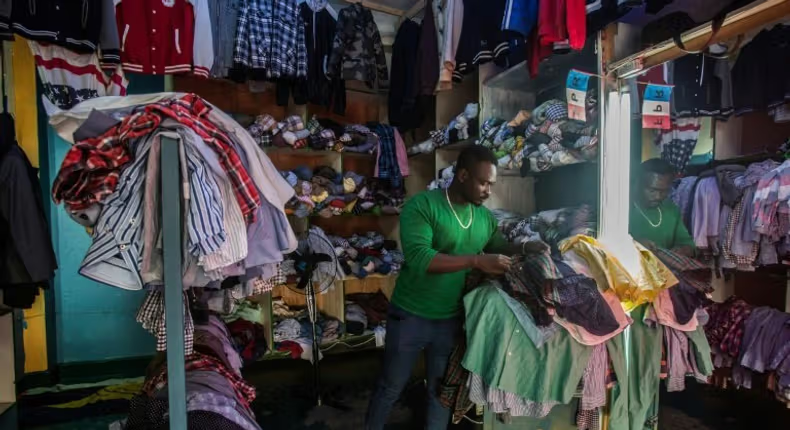
International fashion retailers are increasingly targeting Africa as one of the world’s fastest-growing consumer markets, driven by a rapidly expanding middle class, rising urbanisation and stronger retail infrastructure across key economies.
According to the African Development Bank (AfDB), Africa is home to an estimated 360 million middle-class consumers, creating significant opportunities for global apparel brands seeking new growth markets beyond Europe, Asia and North America.
As consumer spending continues to rise, fashion companies are expanding through franchising, multi-brand partnerships and temporary retail concepts rather than establishing wholly owned stores.
Franchising Leads Market Entry
Franchising has become the preferred strategy for international brands entering African markets, allowing companies to partner with local operators that understand domestic regulations, logistics and consumer preferences.

Industry platform Afretail, launched in 2024 to promote retail expansion across Africa, has already connected numerous international brands with potential franchise partners.
Fashion retailers including Kiabi, Lacoste, Orchestra, Sergent Major and Polo Club have used the platform to explore opportunities across several African countries, with dozens of franchise projects expected to be established over the next few years.
New entrants are also showing growing interest. Caribbean clothing brand Sebastiano recently announced plans to expand into Africa through local retail partnerships rather than operating company-owned outlets.
The company’s lightweight clothing collections, designed for warm climates, are considered well suited to many African markets.
Regional Retail Markets Continue to Mature
While South Africa and Morocco remain Africa’s most developed retail markets, industry experts say several sub-Saharan economies are rapidly becoming attractive destinations for international fashion investment.
Countries including Côte d’Ivoire, Senegal and Nigeria have witnessed significant growth in modern shopping centres, organised retail and consumer spending over the past decade.
Nigeria, Africa’s largest consumer market by population, continues to attract major global brands. International sportswear giant Adidas has expanded its footprint in Lagos with flagship stores serving the country’s growing middle- and upper-income consumers.
Central Africa is also beginning to attract greater attention.
The Democratic Republic of Congo, with a population exceeding 100 million, offers long-term retail potential supported by a vibrant fashion culture and increasing urbanisation. Premium footwear manufacturer J.M. Weston recently opened a limited-time retail concept in Kinshasa, reflecting growing interest from international luxury brands.
Luxury Brands Testing African Markets
Although luxury retailers remain cautious, several global fashion houses are using Africa as both a commercial opportunity and a branding platform.
Chanel’s Métiers d’Art fashion show in Dakar highlighted the continent’s growing influence within global fashion, while luxury resale specialists and premium designers have launched temporary retail experiences in markets such as Côte d’Ivoire and Nigeria.
Industry analysts note that luxury purchasing behaviour in Africa still differs from more mature markets, with many affluent consumers preferring to buy premium brands while travelling internationally.
Nevertheless, the continent’s expanding high-net-worth population continues to attract attention from international fashion companies planning long-term growth.
Logistics And Local Partnerships Remain Critical
Despite strong market potential, exporting fashion products into Africa presents operational challenges that vary between countries.
Import regulations, customs procedures, transport costs and lengthy shipping times remain significant considerations for international retailers.
Businesses operating across multiple African markets increasingly rely on experienced logistics providers and local distribution partners to manage customs clearance, warehousing and cross-border transportation.
Seasonality also influences product strategies, with many retailers focusing primarily on spring and summer collections that match the climate across much of the continent.
Industry experts believe companies willing to invest in local partnerships and long-term market development will be best positioned to benefit from Africa’s expanding consumer economy.
As disposable incomes continue to rise and organised retail networks strengthen, Africa is steadily evolving from an emerging opportunity into one of the world’s most promising fashion growth markets.