


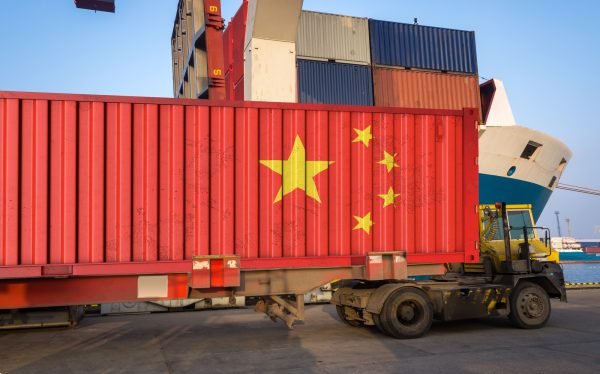
China has announced a zero-tariff policy for nearly all African imports, a move aimed at strengthening trade ties with the continent. However, analysts warn the policy could deepen Africa’s dependence on raw mineral exports, while simultaneously benefiting Chinese companies operating on both sides of the supply chain.
The policy, announced by Xi Jinping, will take effect on May 1 and removes import duties on goods from nearly every African country entering China. The only exception is Eswatini, which maintains diplomatic relations with Taiwan rather than Beijing.
China Expands Trade Incentives for Africa
The duty-free initiative builds on earlier measures that already eliminated tariffs on imports from 33 African Least Developed Countries (LDCs).
Chinese officials have promoted the policy as a major step toward strengthening economic cooperation with the continent. The initiative has been highlighted at international forums including meetings of the Forum on China–Africa Cooperation, the African Union summit, and discussions at the World Trade Organization.

State-run media outlets such as Xinhua News Agency and China Central Television have also widely promoted the policy as a tool to strengthen Africa–China trade relations.
At face value, the initiative appears to create new opportunities for African exporters by improving access to the vast Chinese market.
Concerns Over Africa’s Raw Material Export Model
Despite the apparent benefits, some analysts argue that the new policy could reinforce Africa’s reliance on exporting raw and minimally processed minerals rather than developing higher-value manufacturing industries.
Many African economies rely heavily on the export of natural resources such as cobalt, copper, iron ore, and other critical minerals. By removing tariffs, China effectively lowers the cost of importing these raw materials, potentially encouraging continued extraction rather than local processing within African countries.
As a result, much of the value-added manufacturing and industrial processing linked to these resources continues to take place in China, where finished products are produced and exported globally.
Chinese Companies Dominate Key Mineral Supply Chains
The situation is particularly evident in the cobalt sector in the Democratic Republic of the Congo (DRC), which holds some of the world’s largest reserves of the mineral.
According to research by Gracelin Baskaran of the Center for Strategic and International Studies, Chinese companies now control a significant share of cobalt mining operations in the country.
In 2016, the U.S. mining firm Freeport-McMoRan sold its stake in the major Tenke Fungurume Mine to China Molybdenum Company, now known as CMOC Group.
The Tenke Fungurume operation is considered one of the largest cobalt mines in the world, and its sale significantly expanded Chinese influence in the global cobalt supply chain.
As a result, in many cases the cobalt extracted in the DRC is mined by Chinese companies and exported to Chinese processing facilities—meaning the benefits of tariff reductions often flow to Chinese firms on both sides of the transaction.
Environmental and Social Concerns
While African countries benefit from mining revenues, they also bear many of the associated costs, including environmental degradation, community displacement, and labor concerns.
Research cited by the Wilson Center estimates that around 255,000 people work in cobalt mining in the DRC, including approximately 40,000 children, some as young as six years old. Many of these workers operate in informal mining areas, earning less than $2 per day while relying on basic tools.
Human rights groups have repeatedly raised concerns about child labor, environmental standards, and workplace safety in some mining operations linked to global supply chains.
Africa’s Industrialization Challenge
China’s duty-free policy may help boost African export volumes, but critics say it also highlights the urgent need for the continent to develop local processing and manufacturing capacity.
By expanding domestic industries and mineral beneficiation, African countries could capture greater value from their natural resources, create jobs, and reduce dependence on raw commodity exports.
As global demand for critical minerals used in electric vehicles, renewable energy, and electronics continues to grow, the question remains whether Africa will remain primarily a supplier of raw materials—or move further up the global value chain.