


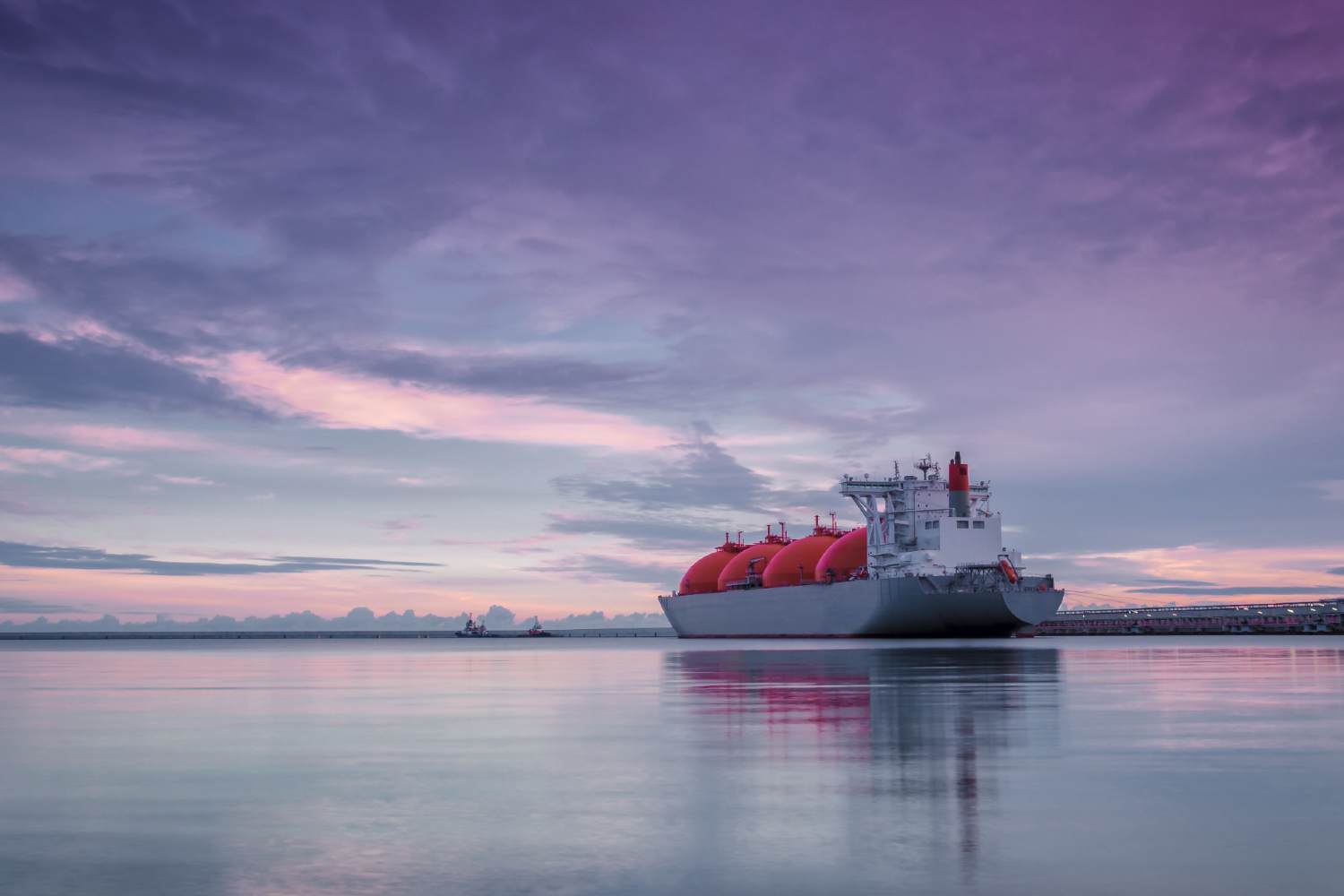
Mozambique is rapidly positioning itself as one of Africa’s most formidable liquefied natural gas (LNG) exporters, with long-term production capacity that could significantly reshape the continent’s energy export hierarchy. Backed by massive offshore gas reserves and multi-billion-dollar investments from global energy majors, the Southern African nation is moving from emerging producer to strategic global supplier.
With an estimated 100 trillion cubic feet (tcf) of proven natural gas reserves — ranking among the top holders in Africa after Nigeria and Algeria — Mozambique’s gas development trajectory suggests that it could rival, and potentially overtake, Nigeria in LNG export volumes within the next decade if current trends persist.
From Modest Beginnings to Mega LNG Expansion
Mozambique currently produces approximately 3.4 million tonnes per annum (mtpa) of LNG from the Coral South Floating LNG (FLNG) facility, operational since 2022 in the Rovuma Basin. While modest in comparison to Nigeria’s long-established LNG sector, this marks only the beginning of Mozambique’s export ambitions.
The upcoming Coral North FLNG project is expected to double that output to around 7 mtpa by 2028. More significantly, two mega-projects are set to transform the country’s export capacity entirely.

The $20 billion Mozambique LNG project, led by TotalEnergies, is designed to deliver 12.9 mtpa once operational, with production targeted for 2029. In parallel, the $30 billion Rovuma LNG project, spearheaded by ExxonMobil, is planned with an 18 mtpa capacity, with a final investment decision expected in 2026.
If executed as scheduled, Mozambique could be exporting at least 34.7 mtpa of LNG by 2034 — a transformative leap that would place it among the continent’s largest LNG producers. Projections suggest these developments could generate as much as $100 billion in revenue for Mozambique by 2045.
Strategic Geography and Investment Appeal
Mozambique’s geographic positioning along the Indian Ocean gives it a logistical advantage in serving both Asian and European markets. Its proximity to the Mozambique Channel provides direct shipping routes to high-demand LNG markets such as Japan, China and India, while also maintaining competitive transit times to Europe.
The offshore Rovuma Basin, one of the most significant gas discoveries in Sub-Saharan Africa, continues to attract strong foreign direct investment. The scale of capital inflows — estimated at over $50 billion across major projects — highlights international confidence in Mozambique’s long-term LNG prospects.
This contrasts with slower development cycles in other African gas-rich nations, where regulatory uncertainty, infrastructure gaps and financing constraints have sometimes delayed large-scale LNG expansion.
A Broader Sub-Saharan LNG Surge
Mozambique’s rise is occurring within a broader regional LNG acceleration. Several African countries are advancing floating LNG (FLNG) projects as a cost-effective and time-efficient route to export markets.
The Greater Tortue Ahmeyim (GTA) gas development between Senegal and Mauritania represents a notable example of cross-border cooperation. The 25 tcf offshore field, jointly developed on a 50/50 basis, began Phase 1 LNG production in 2025 with a capacity of approximately 2.3–2.5 mtpa. The project integrates offshore processing via floating production, storage and offloading systems linked to near-shore liquefaction infrastructure.
Across the continent, Africa now accounts for roughly 40 percent of global FLNG capacity. Operational and near-term projects span countries including Mozambique, Cameroon, the Republic of Congo, Gabon and Nigeria. Collectively, these FLNG installations represent a scalable capacity base exceeding 15 mtpa, demonstrating that many African producers are leveraging offshore liquefaction to fast-track exports without the long lead times associated with onshore mega-plants.
Nigeria’s Competitive Crossroads
Nigeria remains Africa’s leading LNG exporter, anchored by decades of production and the continent’s largest proven gas reserves. However, Mozambique’s rapid capacity build-up introduces a serious competitive dynamic.
While Nigeria continues to advance projects such as the UTM FLNG initiative, the broader pace of gas development has often been described as gradual. In contrast, Mozambique’s concentrated project execution and aggressive investment timelines suggest a faster trajectory toward export expansion.
If Mozambique reaches its projected 34 mtpa capacity by the mid-2030s, it could significantly narrow the gap with Nigeria or potentially challenge its continental leadership position.
The Strategic Imperative for Gas-Rich Economies
The rise of Mozambique underscores an important lesson for Africa’s gas-rich economies: the global LNG market is dynamic, capital-intensive and highly competitive. Timing, investor confidence and regulatory clarity are critical factors in determining market share.
Global LNG demand remains robust, particularly in Asia and parts of Europe seeking energy diversification. African producers with efficient project delivery, strategic partnerships and modern infrastructure stand to capture long-term supply contracts.
For Mozambique, the combination of vast reserves, strong international partnerships and geographic advantage is driving a rapid transformation from emerging player to LNG heavyweight.
For Nigeria and other established exporters, the message is clear: sustained leadership will require accelerated development, expanded private-sector participation and coordinated investment across upstream and midstream gas infrastructure.
Africa’s LNG Future: A Multi-Polar Landscape
Over the next decade, Africa’s LNG map is likely to become increasingly multi-polar, with Mozambique, Nigeria, Senegal-Mauritania and others contributing significant export volumes. Rather than a single dominant supplier, the continent may evolve into a diversified LNG hub serving multiple global markets.
Mozambique’s emergence is not simply a national success story — it is a signal of Africa’s growing role in global energy security. The question now is how existing producers respond, and whether strategic collaboration or competitive acceleration will define the next chapter of Africa’s LNG export era.