


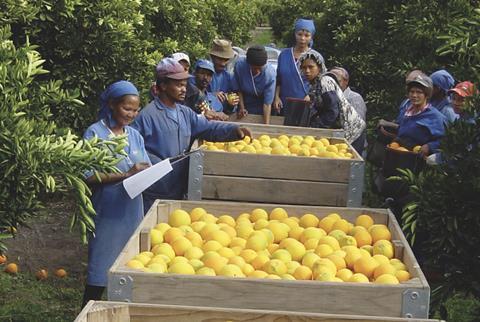
South Africa’s agricultural export sector is projected to exceed $13.7 billion in 2026, following 10% year-on-year growth in the first nine months of 2025, according to a new report by Verto.
The growth has been driven largely by high-value horticultural exports, including:
- Citrus
- Table grapes
- Macadamia nuts
Horticulture continues to anchor the sector’s resilience amid mounting logistical and policy challenges.
Market Diversification Supporting Growth
Exporters have reduced reliance on traditional Western markets by expanding into:

- Broader African markets
- BRICS economies such as China
- India
This diversification strategy has helped cushion the impact of increasing global trade barriers.
However, policy uncertainty remains a risk — particularly around the future of the African Growth and Opportunity Act (AGOA).
If AGOA is not renewed or revised, key exports like citrus, wine and nuts could face US tariffs of 3%–15%, potentially weakening competitiveness in one of South Africa’s major export markets.
Infrastructure Bottlenecks Eroding Profits
Despite rising export volumes, exporters are grappling with structural inefficiencies:
- Persistent congestion at major ports
- Ageing and unreliable rail infrastructure
- Operational delays affecting perishable goods
These challenges increase:
- Demurrage costs
- Spoilage risk
- Delivery uncertainty
- Margin compression
The core issue: value is being lost between production and final sale due to supply-chain friction.
Financial Agility as a Competitive Lever
Beyond logistics, cross-border payment inefficiencies are also weighing on profitability. Exporters face:
- Slow settlement times
- High banking fees
- Unfavourable foreign exchange rates
- Currency volatility in the rand
According to Verto, exporters that adopt modern financial tools — such as multi-currency accounts, faster settlement systems and proactive currency risk management — are better positioned to protect margins.
As James Booth, Head of Revenue at Verto, notes, while exporters cannot quickly overhaul ports or rail networks, they can improve how capital flows across borders — one of the fastest ways to stabilise profitability.
The Bigger Picture
South Africa’s agricultural sector is demonstrating strong global competitiveness and adaptability. However, sustaining growth will require a dual strategy:
- Long-term investment in logistics and infrastructure reform
- Immediate improvements in financial systems and cross-border payment efficiency
In short: export volumes are rising — but protecting margins will determine whether that growth translates into sustainable gains.