


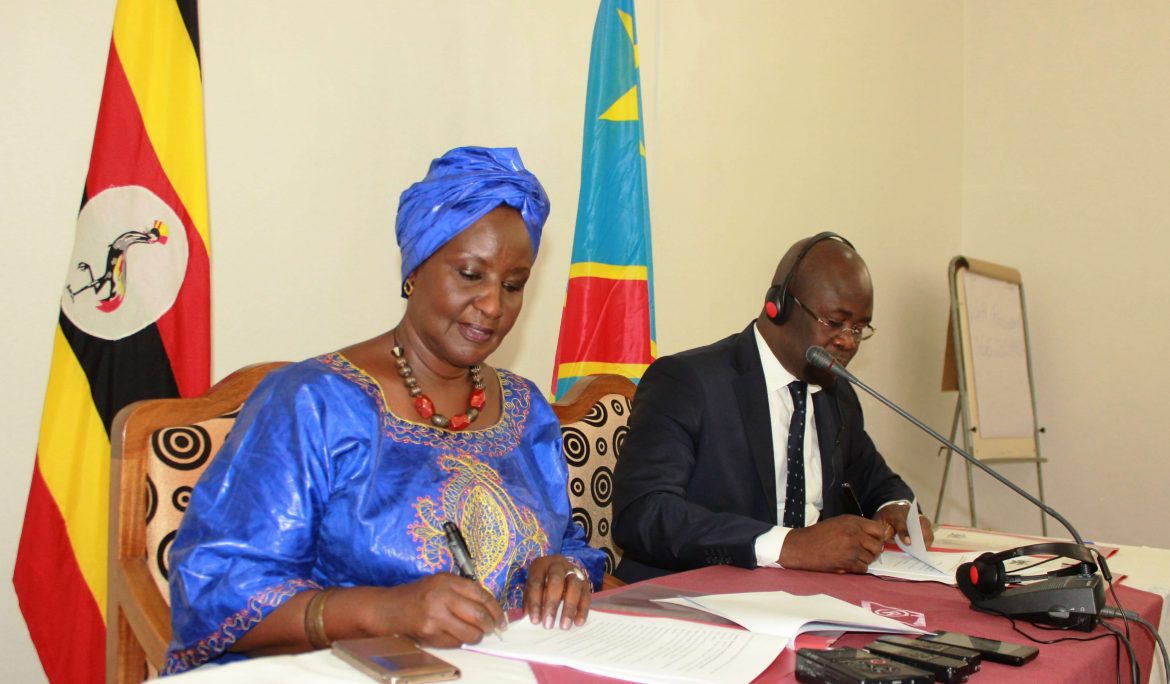
Uganda’s export landscape is undergoing a major transformation, with the Democratic Republic of the Congo (DRC) now firmly established as the country’s largest export destination in Africa. Driven by rising manufactured exports, improving regional integration and expanding infrastructure links, trade between the two neighbours has surged—reshaping Uganda’s regional trade strategy.
President Yoweri Museveni, speaking alongside DRC President Félix Tshisekedi, has welcomed the growing enthusiasm among citizens and traders for deeper East African integration, describing cross-border trade as a powerful engine for growth and regional stability.
From primary exports to diversified trade
Uganda’s export journey reflects a decisive shift from its post-independence reliance on cotton and coffee to a more diversified, industrialised export base. According to the Ministry of Trade, Uganda’s merchandise exports reached US$10.6 billion in May 2025, powered by strong demand for coffee, gold, cocoa and manufactured goods such as cement.
Manufactured exports have been a standout success. Their share of total exports more than tripled—from 4.2% in FY2010/11 to 13% in FY2022/23—underscoring the country’s push toward value addition, industrialisation and cooperative-led production.

DRC takes the lead as Uganda’s top African market
Latest data from the Bank of Uganda (BoU) shows that in the 12 months to November 2025, Uganda’s exports to the DRC reached US$625 million, making it the country’s largest export market in Africa.
Kenya, long Uganda’s top destination, slipped to second place with US$592.9 million, followed by South Sudan (US$492 million), Rwanda (US$328 million), Tanzania (US$175 million), Sudan (US$119 million) and Burundi (US$66.3 million).
In total, Uganda recorded US$12.7 billion in export receipts during the period—a 33% increase from US$8.5 billion in 2024—highlighting the economy’s resilience amid global uncertainty, supported by prudent monetary policy and relative macroeconomic stability.
What Uganda sells to the DRC
Uganda’s exports to the DRC are dominated by manufactured and processed goods, reflecting growing industrial capacity. Key exports include cement, sugar, soft drinks, palm oil and motorcycles, while the DRC supplies Uganda with raw materials such as cocoa, timber and minerals.
In 2023 alone, Uganda exported US$411 million worth of goods and services to the DRC. Over the past five years, exports have grown at an annualised rate of 15.1%, rising from US$203 million in 2018. By 2025, total bilateral trade surpassed US$1 billion, up from around US$500 million in 2020—a jump attributed to improved security, better border infrastructure and the DRC’s accession to the East African Community (EAC).
Policy reforms and mobility boost trade
To further stimulate trade and movement, Uganda scrapped visa requirements for DRC nationals on 1 January 2024. By early 2024, official data from the finance ministry showed Uganda’s annual trade earnings from the DRC at around US$400 million, cementing the country’s position as Uganda’s largest trade surplus market—regionally and continentally.
Infrastructure: the missing link
Despite the boom, exporters say infrastructure remains a bottleneck. Poor road conditions on key routes to western borders continue to delay deliveries and raise costs.
At the October 2025 International Trade Fair in Kampala, hosted by the Uganda Manufacturers’ Association (UMA), industry leaders reiterated the need for faster infrastructure upgrades. UMA Board Member Adinar Rayana said the association aims to lift manufacturing’s contribution to GDP to 30%, driven largely by increased exports to the DRC.
Finance Minister Matia Kasaija noted that manufacturing already contributes 25.4% to the national treasury and 30.7% to overall revenue, reinforcing its role as a pillar of economic development. However, UMA Chairman Aga Ssekalala warned that poor road conditions to border points are undermining competitiveness.
Roads, corridors and regional ambition
In November 2021, Uganda and the DRC launched a joint infrastructure programme to upgrade 220 kilometres of cross-border roads, a move Kampala believes will significantly boost exports to mineral-rich eastern DRC. President Museveni has also called for road links connecting Uganda, the DRC and South Sudan, positioning the country as a gateway between East and Central Africa.
At Uganda’s 62nd Independence Anniversary celebrations in October 2024, Museveni floated the idea of Uganda Airlines opening a route to Bangui, the capital of the Central African Republic, highlighting Uganda’s ambition to become a regional logistics and trade hub.
Momentum is also building around the 193-kilometre Kenya–Uganda multinational expressway, part of the Northern Corridor linking Uganda, Rwanda, Burundi, the DRC and South Sudan to the port of Mombasa. Works and Transport Minister Edward Katumba-Wamala confirmed in October 2025 that the project is investment-ready following completed feasibility studies and will be developed through public–private partnerships in line with Uganda’s Vision 2040.
Continental integration on the horizon
Beyond regional blocs such as the EAC and COMESA, Uganda is positioning itself for continental trade under the African Continental Free Trade Area (AfCFTA), which it ratified in 2018. The agreement opens access to a market of 1.3 billion people with a combined GDP of US$3.4 trillion.
As global institutions—including the World Bank, International Monetary Fund and African Development Bank Group—continue to rank East Africa among the world’s fastest-growing regions, Uganda’s expanding trade with the DRC stands out as a defining success story.
For ExportFocus Africa, the message is clear: Uganda’s western neighbour is no longer just a regional partner—it is now the cornerstone of the country’s export-driven growth strategy in Africa.