


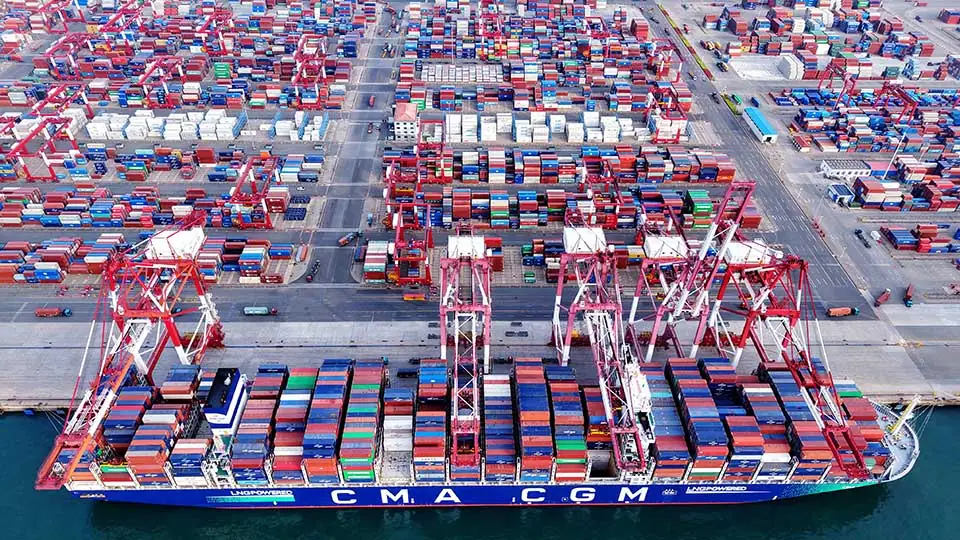
China’s exports rebounded in November 2025 as stronger demand from Africa and other emerging markets helped offset a sharp fall in shipments to the United States, signaling a mixed recovery for the world’s second-largest economy. Customs data released on December 8 showed outbound goods rising 5.9 percent to $330.3 billion, reversing October’s 1.1 percent contraction and surpassing economists’ expectations.
The rebound comes despite an ongoing slump in trade with the United States, where Chinese exports plunged nearly 29 percent year-on-year, marking the eighth consecutive month of double-digit declines. Beijing’s exporters have leaned increasingly on developing markets this year, with shipments to Africa, Southeast Asia, and Latin America strengthening as US demand weakens. Analysts say this geographic rebalancing reflects both shifts in global supply chains and growing appetite for Chinese-manufactured goods in emerging economies.
Imports also showed modest improvement, rising 1.9 percent in November compared with 1 percent in October. The increase points to pockets of resilience in domestic demand, even as China continues to grapple with a prolonged property downturn and subdued consumer spending. The recent trade truce between Beijing and Washington, agreed during the October meeting between President Donald Trump and President Xi Jinping in South Korea, has provided some optimism. The United States moved to lower certain tariffs on Chinese goods, while China committed to suspending export controls on rare earths. However, analysts caution that the benefits may be limited, noting that China now faces unfavorable comparisons against strong export growth recorded before Trump reintroduced substantial tariff hikes after returning to the White House.
Factory activity contracted again in November, marking eight consecutive months of decline. Economists argue it is too early to confirm whether external demand is undergoing a genuine recovery. Even so, Beijing appears on track to achieve its growth target of around 5 percent this year.
Policymakers have already set advanced manufacturing as a priority for the next five-year plan, with detailed strategies expected to emerge from an upcoming economic planning meeting.

Looking ahead, analysts believe China will continue expanding its global export footprint. Morgan Stanley projects China’s share of global goods exports will reach 16.5 percent by 2030, up from about 15 percent today. Chief Asia Economist Chetan Ahya emphasized that China’s strength in electric vehicles, robotics, and battery technology will continue to give it a competitive edge despite persistent global trade tensions.