


This analysis explores how recent U.S. trade and aid policy shifts may impact African economies, highlighting risks and opportunities for resilience
Introduction
President Donald Trump has significantly disrupted the United States’ long-term engagement in Africa. On April 2, 2025, as part of his “Liberation Day” initiative, he introduced a baseline 10% tariff on all U.S. imports, with additional country-specific “reciprocal tariffs” set to take effect on April 9. Lesotho was hit hardest with a 50% tariff, followed by Madagascar at 47% and Mauritius at 40%.
These measures threaten the African Growth and Opportunity Act (AGOA), a preferential trade program that has allowed tariff-free exports from sub-Saharan African countries to the U.S. since 2000. The program is set to expire in September 2025 unless renewed by Congress.
The tariff policy follows a 90-day freeze on new foreign aid launched in January 2025, alongside the suspension of existing programs. The freeze has led to termination of 90% of the U.S. Agency for International Development USAID’s 6,300 projects, causing disease-related deaths, organizational shutdowns, and disruptions in the delivery of vital supplies.

Deep dive into the measures:
Out of the 54 African countries, at least 25 that trade with the United States have faced reciprocal tariffs. Botswana, Angola, Libya, South Africa, and Algeria were hit with tariffs of 37%, 32%, 31%, 30% and 30% respectively. Trump imposed a 28% tariff on Tunisia, and 21% tariffs both on Côte d’Ivoire and Namibia, while Zimbabwe faced an 18% tariff. Zambia and Malawi each received 17% tariffs, Mozambique 16%, Nigeria 14%, and Equatorial Guinea and Chad 13%. The Democratic Republic of Congo and Cameroon were subjected to 11% tariffs, while a 10% tariff was imposed on goods from Egypt, Morocco, Kenya, Ethiopia and Ghana.
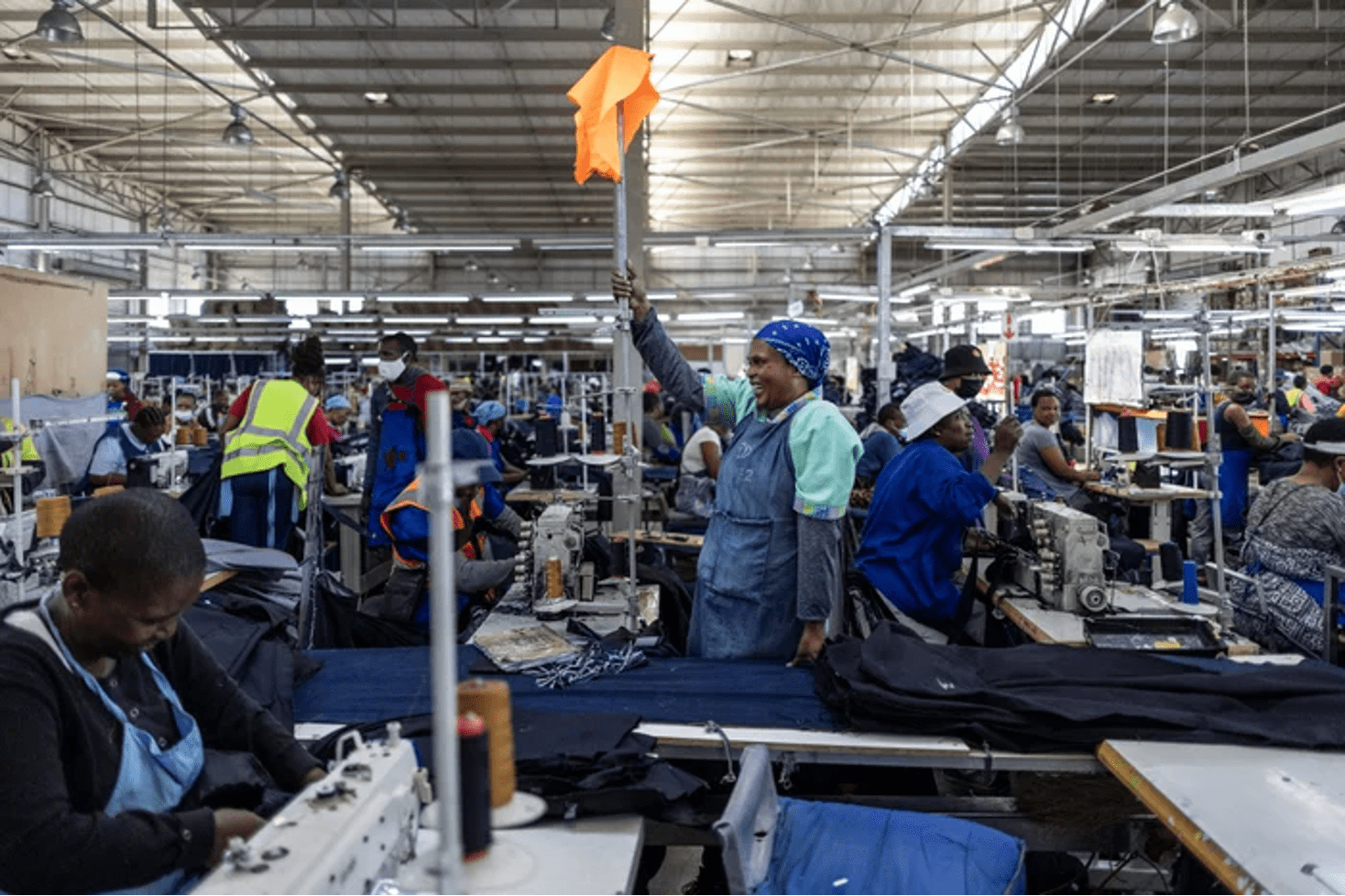
Raw petroleum ($7.3 billion), precious metals ($4.7 billion), and gemstones ($2.2 billion) remain the top African exports to the United States. However, the automotive sector ($1.7 billion) and the clothing industry ($1.4 billion) are likely to be heavily impacted by the rise in import duties.
Within a month of the aid freeze, several nonprofits launched emergency funds to support life-saving programs and to stabilize organizations at risk of closure. These emergency funds have raised between several hundred thousand dollars to over $3 million, mostly from individual donors. Some have already distributed hundreds of thousands of dollars. However, this amount does not come close to replacing the tens of billions lost due to U.S. aid cuts.
The dismantling of USAID has disrupted a major pillar of U.S.-Africa engagement. However, it must be assessed whether this could open the door for more balanced and mutually beneficial partnerships.
Several African governments have depended heavily on USAID for essential healthcare functions, particularly for HIV, TB and malaria programs, with foreign aid accounting for up to 60 % of annual healthcare expenditure in some countries. Aid had effectively become the backbone of many African health systems.
Status quo
The top exporters to the United States under AGOA are South Africa ($14.0 billion), Nigeria ($5.7 billion), Ghana ($1.7 billion), Angola ($1.2 billion), and Côte d’Ivoire ($948 million). South Africa and Nigeria are the United States’ top trading partners on the continent. South Africa primarily exports precious stones, steel products, and cars (mainly from BMW South Africa) to the U.S., while Nigeria exports crude oil and other petroleum products. In return, the U.S. exports crude oil, electrical goods and aircraft to South Africa, and mostly vehicles and machinery to Nigeria. Ghana (cocoa and crude oil), Ethiopia (coffee), and Kenya (textiles, tea) also record significant trade volumes annually under the AGOA.
These countries will be most affected by the new tariffs policies, although Ghana, Ethiopia, and Kenya face only 10% universal tariffs.
The funding freeze has exposed how reliant many countries are on Northern aid, but also highlights structural inequities in North and South relations, where political decisions made in wealthy countries can have life-or-death consequences for populations in the Global South. A fairer model would prioritize the agency of Southern states and redirect aid to where it is most urgently needed.
Best-Case scenario
This situation could present an opportunity for African nations to reduce their reliance on single trading partners and commodity exports. Diversifying their relationships could be pivotal for African nations to become independent, reduce their reliance on external assistance, and create sustainable systems. According to the African Union, the African Continental Free Trade Area (AfCFTA) presents a crucial opportunity to strengthen intra-African trade, diversify export portfolios, and build regional value chains.
Moreover, many analysts argue how AGOA is underutilized. Only about half of eligible countries have developed national AGOA utilization strategies. U.S. imports from AGOA beneficiaries peaked in 2008 at $82 billion and had fallen to $29.1 billion in 2024. Nineteen AGOA countries have a share of total exports to the U.S. below 4%, with Togo right on the line.
Energy is exempt from the new tariffs, so major oil, gas, and petroleum exporters, including Angola, Chad, the DRC, Ghana, and Nigeria, will not be significantly affected. However, countries relying on the U.S. as a primary export market for apparel exports could face severe consequences.
A potential positive outcome of AGOA’s shutdown could be the creation of a new agreement that includes more countries and industries, especially in emerging sectors like technology and digital services.
Worst scenario
The countries likely to suffer the greatest negative effects from the tariffs and a possible AGOA collapse are South Africa, Nigeria, Lesotho, and Madagascar. Lesotho, one of the poorest nations involved, is particularly vulnerable.
In recent years, Africa has seen a shift in global economic alliances, with China surpassing the U.S. as its top trading partner. China is the primary buyer of Africa’s key exports, including crude oil (from Nigeria and Angola), copper (from Zambia), cobalt (from the DRC), and various agricultural products.
A greater concern lies in the spillover effects of a prolonged U.S.-China trade conflict. The disruption of U.S.-Africa relations, when viewed through the lens of U.S-China rivalry, could significantly weaken African economies, not just harm United States. If these tensions lead to a prolonged slowdown in China’s economy, African commodity exporters may face sharp declines in export revenues, deteriorating trade balances, and increased foreign exchange pressures. However, as mentioned above, this disruption can also present an opportunity. If Africa’s two major partners loosen their economic grip, African countries may be compelled to diversify their trade relations and build stronger commercial partnerships with third countries.
Regarding USAID, an advocacy program tracker for the U.S. President’s Emergency Plan for AIDS Relief (PEPFAR) estimated that, as of March 7, 2025, 50,000 additional deaths had occurred due to funding pauses.
Modeling using the University of Denver’s International Futures platform predicts that 5.7 million more Africans would fall below the $2.15/day extreme poverty line within a year if Trump’s aid-reduction policies are implemented.
The economies of these eight low-income countries, South Sudan, Somalia, the Democratic Republic of Congo, Liberia, Afghanistan, Sudan, Uganda, and Ethiopia, are especially vulnerable. In these nations, foreign aid accounts for an average of 11 % of gross national income (GNI) and USAID contributes 30 percent of that. The freeze could create a shortfall equivalent to over 3 % of GNI, representing a potentially major economic shock.
Conclusion
Governments should channel domestic funds to re-deploy the highly trained staff from shuttered programs and build robust, routine data systems to measure outcomes. Development experts argue that aid must be redirected away from geopolitical interests (e.g. rewarding allies) and toward vulnerable nations with weaker fiscal capacity. This also entails reducing donor conditionality and fostering locally led development.
With USAID funds frozen and staff repatriated, other donors, particularly Germany, Canada, Japan, and Sweden, should step in and take the U.S.’s place as lead providers. Others, including China, Spain, and the UK should accelerate their assistance to prevent further destabilization and loss of life in fragile states.