


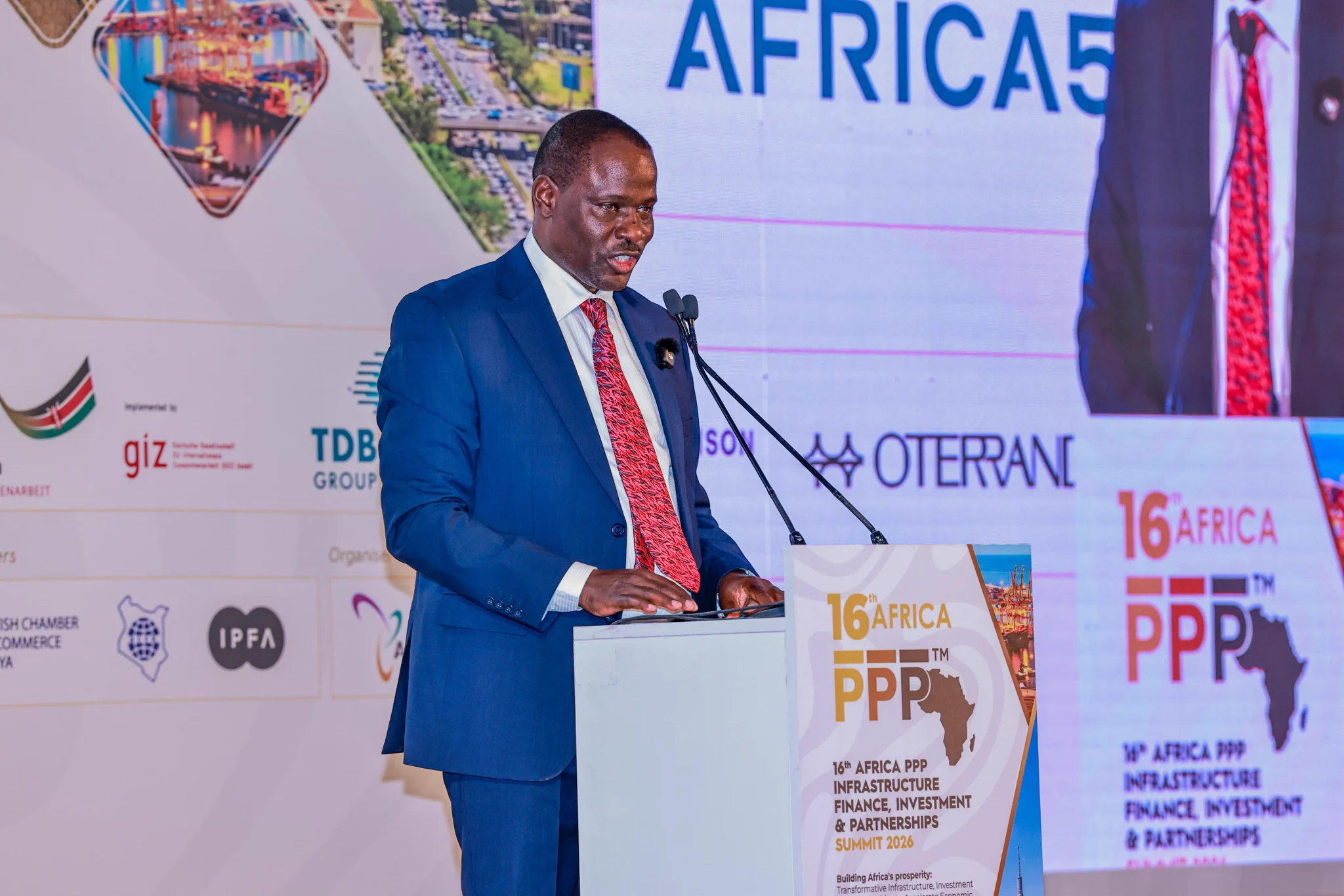
African governments, investors and infrastructure developers are being urged to move beyond discussions about the continent’s infrastructure financing gap and focus on developing commercially viable projects capable of attracting private capital.
The call was made during the launch of the 16th Africa PPP Infrastructure Finance, Investment & Partnerships Summit (Africa PPP 2026), which brought together more than 400 delegates from 36 countries in Nairobi, Kenya, from November 11 to 13.
The summit, hosted by Kenya’s Public Private Partnerships (PPP) Directorate and organised by AME Trade Limited, is focused on strengthening partnerships between governments, financiers and private-sector developers to accelerate infrastructure investment across Africa.
Africa requires between $130-billion and $170-billion in infrastructure investment annually, while its financing gap is estimated at between $68-billion and $108-billion. This shortfall persists despite more than $4-trillion in domestic savings and assets held across the continent, highlighting the need to connect available capital with investment-ready projects.
Kenya showcases growing infrastructure project pipeline

Kenya’s public-private partnership programme illustrates the opportunities available to investors.
The country has a pipeline of 60 projects across national and county governments. Ten projects, valued at approximately KES353-billion, are already operational or under construction, while another 50 are at different stages of preparation and development.
The government is targeting at least KES70-billion in additional private investment through PPPs during the current financial year, following approval of seven new projects in the first quarter.
Among the major developments is the KES183-billion Nairobi–Nakuru–Mau Summit Highway, demonstrating the potential for private-sector participation in large-scale transport infrastructure.
Speaking at the summit’s launch, Kenya’s Cabinet Secretary for the National Treasury and Economic Planning, John Mbadi, represented by Investments, Trade and Industry Cabinet Secretary Lee Kinyanjui, said infrastructure development should be measured by the actual delivery of services and economic benefits rather than financing commitments alone.
He emphasised the importance of translating infrastructure plans into completed roads, reliable water supplies, electricity access and employment opportunities.
Project preparation key to attracting private investment
A central theme of Africa PPP 2026 is improving the bankability of infrastructure projects to attract institutional investors, commercial banks, pension funds and insurers.
Participants are examining barriers that prevent available capital from reaching infrastructure developments, including inadequate project preparation, financing structures and risk allocation.
Kenya’s Principal Secretary for Public Investments and Assets Management, Cyrell Wagunda, stressed the importance of investing in feasibility studies, technical assessments, environmental and social safeguards, land acquisition planning and appropriate risk allocation.
Addressing these issues early can reduce delays during negotiations and implementation while improving investor confidence.
Discussions are also covering blended finance, domestic capital mobilisation, risk management and commercially sustainable infrastructure models.
The summit’s project preparation masterclass, Africa PPP Deal Room, business breakfast and technical visits are designed to connect project owners with potential financiers and help move developments towards financial close.
Zambia among countries participating in investment discussions
The summit also provides a platform for African countries to showcase infrastructure opportunities and strengthen regional investment partnerships.
Zambia’s participation includes representatives from the country’s PPP Office, the Zambia Road Development Agency and other infrastructure institutions.
Projects expected to feature in discussions include the Lusaka–Ndola Dual Carriageway PPP and the Luapula Bridge and One-Stop Border Post.
Their participation provides an opportunity to engage potential investors and financing institutions on infrastructure development supporting regional connectivity, transport efficiency and cross-border trade.
Other participating institutions include Ethiopia’s PPP Directorate General, Tunisia’s General Authority for Public-Private Partnerships, British International Investment, the Industrial Development Corporation of South Africa and the African Trade & Investment Development Insurance institution.
Infrastructure investment beyond traditional financing
Africa PPP 2026 is taking place as governments increasingly explore alternative financing arrangements to expand infrastructure delivery without placing excessive pressure on public budgets.
The discussions are focusing on how guarantees, political-risk insurance, blended finance and improved risk-sharing mechanisms can encourage private-sector participation.
Priority sectors include energy, transport, water and sanitation, logistics, industrial parks, digital infrastructure and urban development.
For Africa’s mining industry, the availability of reliable transport corridors, electricity, water infrastructure and efficient logistics networks remains essential to improving operational competitiveness and supporting mineral production and trade.
The summit’s emphasis on bankable projects therefore has implications beyond infrastructure financing, with potential benefits for mining investment, industrialisation and regional supply-chain development.
Ultimately, the challenge facing African governments is not simply mobilising more capital, but preparing projects that can attract financing, reach implementation and deliver measurable economic benefits.