


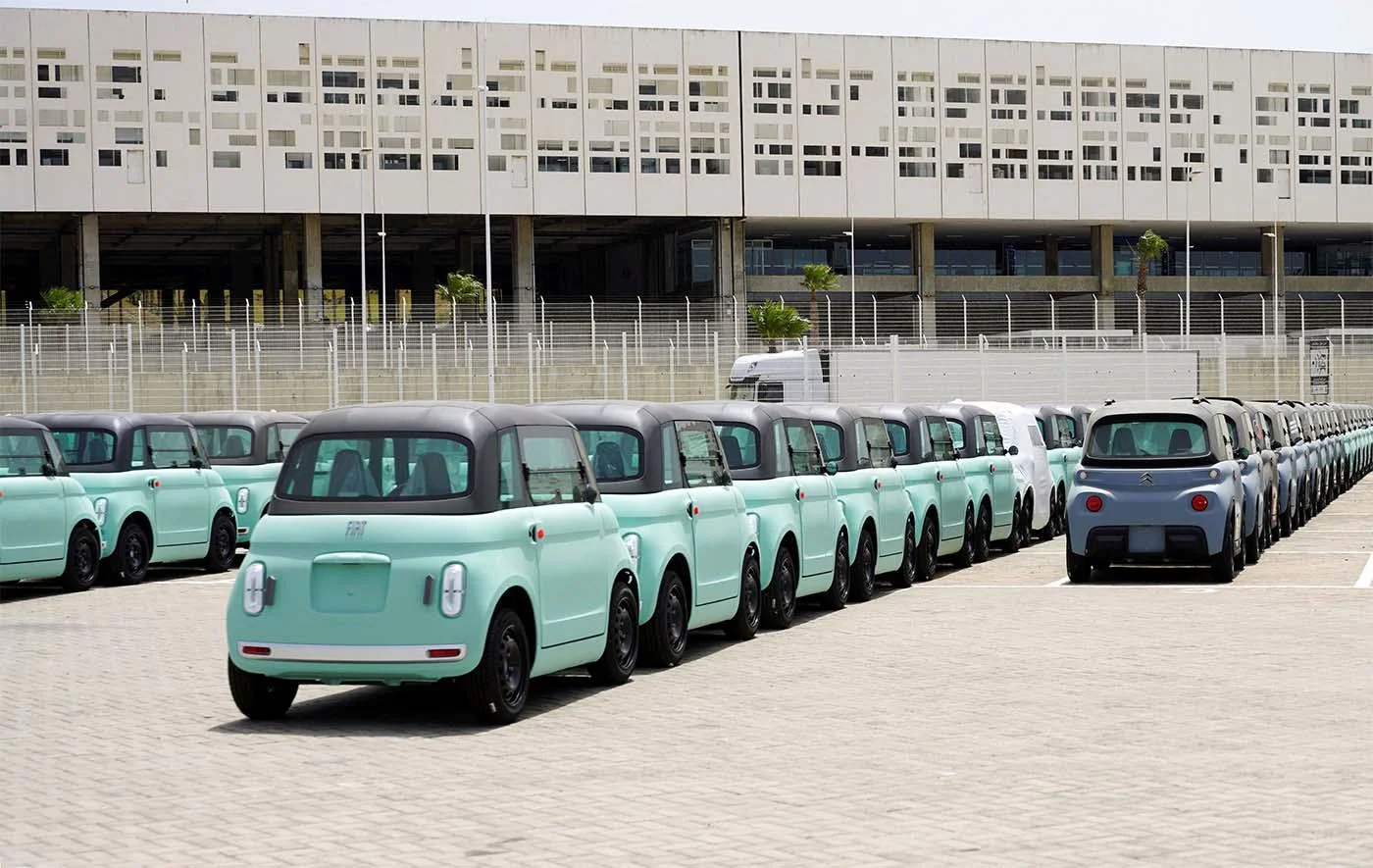
Morocco’s automotive industry has strengthened its position as the country’s leading export sector, accounting for 34.68% of total national exports by the end of August 2026, up from 25.1% in 2015.
Data from Morocco’s foreign exchange regulator shows that automotive exports increased by 191.3% over the decade, rising from 54.7 billion dirhams in 2015 to 159.2 billion dirhams in 2025.
The sector maintained its momentum in 2026, with exports reaching 116.14 billion dirhams during the first eight months of the year, representing a 14.5% increase compared with the same period in 2025.
Automotive exports accounted for 41.5% of the overall increase in Morocco’s exports over the past decade. Total national exports more than doubled, climbing from 218 billion dirhams in 2015 to 470 billion dirhams in 2025.
The automotive industry has now overtaken other major export sectors, including phosphates and derivatives, which generated 99.8 billion dirhams in 2025, and agri-food exports, valued at 86.83 billion dirhams.

Manufacturing capacity drives export growth
Morocco has emerged as Africa’s leading vehicle producer and exporter, surpassing South Africa. The country has an installed manufacturing capacity of approximately one million vehicles annually, with more than 90% of production destined for export markets.
Its automotive industry is anchored by Renault manufacturing plants in Tangier and Casablanca, alongside Stellantis’ facility in Kenitra. These operations are supported by an extensive supplier network producing wiring systems, powertrain components and other automotive parts.
The development of these integrated industrial ecosystems has helped Morocco attract manufacturers and suppliers while strengthening its position in international automotive supply chains.
Europe remains the main export destination
European markets account for approximately 80% of Morocco’s vehicle exports, with France serving as the leading destination.
Vehicles manufactured in Morocco are exported to more than 70 countries, supported by the country’s established logistics infrastructure.
Tanger Med port plays a central role in the sector’s export operations, handling hundreds of thousands of vehicles annually and connecting Moroccan manufacturers with international markets.
Electric vehicles form part of the next growth phase
The industry’s expansion reflects a long-term industrial strategy centred on export-oriented manufacturing, integrated supplier networks and the development of increasingly sophisticated production capabilities.
Morocco is also expanding its ambitions in electric vehicle manufacturing, seeking to strengthen its position as the global automotive industry transitions towards electrification.
With automotive exports continuing to grow, the sector has become a cornerstone of Morocco’s foreign trade and an increasingly important contributor to the country’s industrial development.