


Africa’s intra-African trade continues to gain momentum, creating opportunities to accelerate investment, industrialisation and the processing and value addition of the continent’s natural resources.
According to Afreximbank’s Africa in Figures 2025 report, intra-African trade increased by 5.4% in 2024 to reach US$206.6 billion. The continued implementation of the African Continental Free Trade Area (AfCFTA) is expected to further strengthen trade links between African economies.
Despite this progress, significant gaps in trade information, investment opportunities and market intelligence continue to limit the ability of African businesses to expand across borders. Limited knowledge of markets, regulatory requirements and access to trade finance remain important barriers to cross-border growth.
The Intra-African Trade Fair (IATF) has emerged as one of the continent’s leading platforms for addressing these challenges by connecting businesses, investors and policymakers while creating opportunities for partnerships and new commercial relationships.
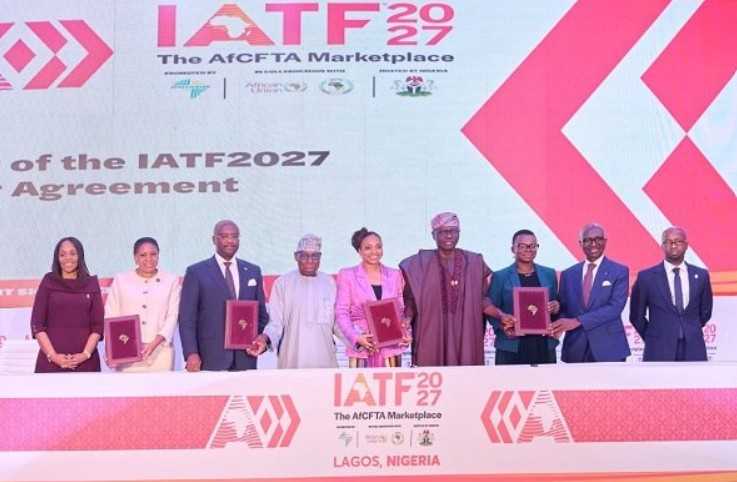
Following the fourth edition of IATF, held in Algiers in 2025, attention is now turning to Nigeria, which will host IATF2027 in Lagos from 5 to 11 November 2027.

IATF2025 generated US$50 billion in trade and investment deals and demonstrated the growing appetite for African businesses to expand into new markets across the continent. The fair has increasingly moved beyond being a conventional exhibition, becoming a platform for market access, investment and the development of regional and continental value chains.
IATF2027 is expected to build on this momentum. Organisers are targeting more than US$50 billion in trade and investment deals, over 100,000 visitors and more than 2,500 exhibitors, potentially making the Lagos edition the largest IATF to date.
Under the theme “Global Africa, Smart Trade: From Market Access to Market Power,” the event is intended to reinforce Africa’s role in shaping its own economic future and strengthening the commercial connections needed to support intra-African trade.
The scale of IATF’s previous editions demonstrates the growing commercial interest. Across its first four editions, the fair attracted more than 180,000 participants and 6,600 exhibitors from 132 countries, generating more than US$167 billion in cumulative trade and investment deals.
The impact has also extended to smaller businesses. According to the Impact of the Intra-African Trade Fair on Development and Trade, 2018–2024 report, 62.4% of concluded deals directly supported intra-African trade, representing more than US$8.5 billion for each edition. Nearly 360,000 small businesses and SMEs have benefited, including women- and youth-led enterprises.
Employment is another important outcome. The report estimates that every US$1 million invested through IATF generates approximately 42 jobs, with each fair supporting more than half a million direct employment opportunities across the continent.
For African businesses, however, the opportunity extends beyond the physical event. IATF Virtual provides a platform for exhibitors and businesses to maintain relationships, follow up on leads and continue commercial engagement throughout the year.
Such digital platforms could become increasingly important for SMEs that face the financial and logistical challenges associated with travelling to international trade events.
Nigeria’s role as host of IATF2027 is particularly significant. The country combines one of Africa’s largest consumer markets with substantial natural resources and industrial potential. Its oil and gas sector, solid mineral resources including lithium, iron ore and gold, and major agricultural commodities provide opportunities to develop stronger African value chains.
The success of AfCFTA will depend not only on agreements between governments, but also on whether African businesses are equipped to identify opportunities, meet standards, understand regulations and build commercial partnerships across borders.
Nigeria has already been supporting this process through export-readiness programmes, capacity-building initiatives, certification support and partnerships involving institutions such as the Nigerian Export Promotion Council and the Small and Medium Enterprises Development Agency of Nigeria.
Lagos is also strengthening the infrastructure required to support greater trade activity, including investments linked to the Lekki Deep Sea Port, logistics corridors, industrial clusters and business development hubs.
With intra-African trade already reaching US$206.6 billion in 2024 and IATF continuing to generate substantial commercial activity, the next challenge is to convert this momentum into sustained business relationships, investment and production across African markets.
IATF2027 in Lagos will provide another major opportunity for companies, investors and governments to connect and develop these relationships. More importantly, its success could help demonstrate how improved market access, trade intelligence and business connectivity can support Africa’s long-term industrialisation and economic integration.