


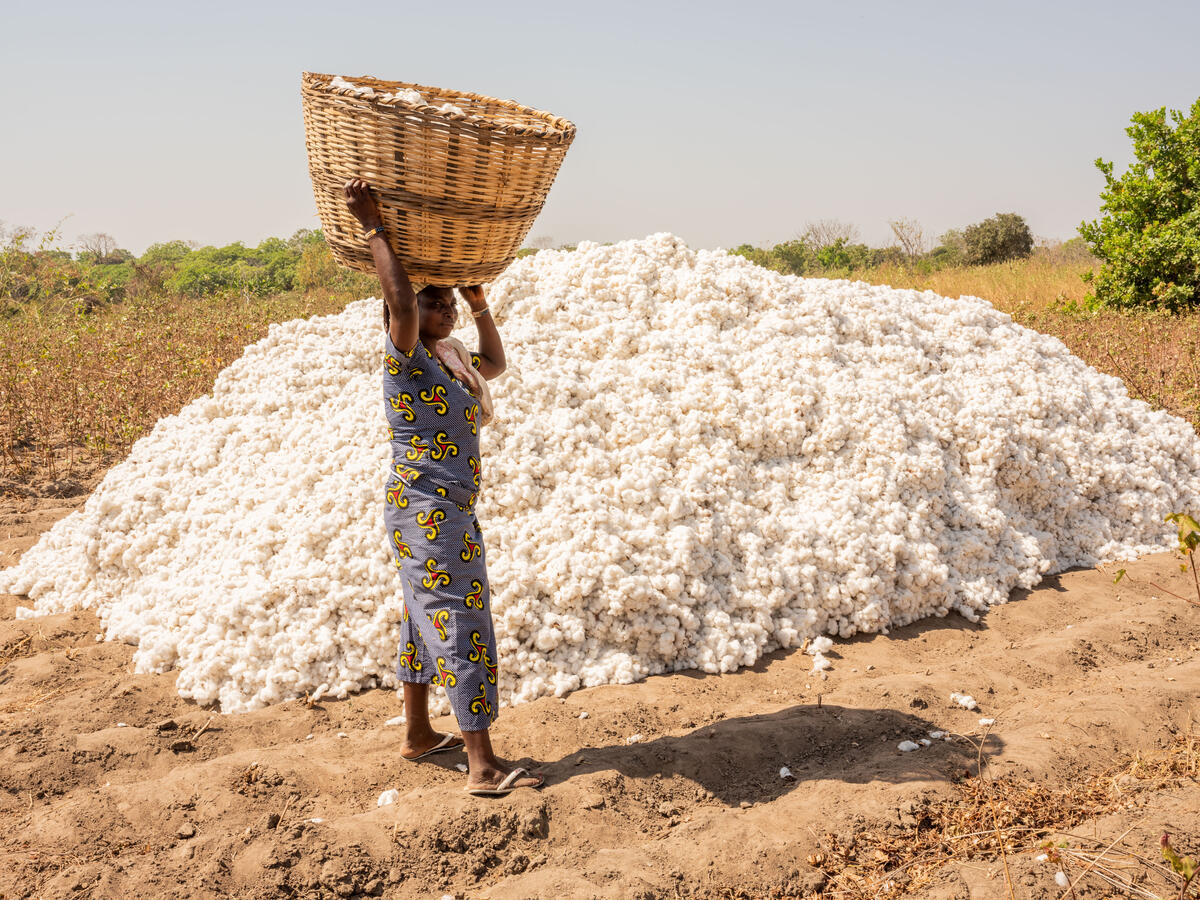
Benin is moving to capture more value from its cotton industry by processing more of its crop locally and turning raw cotton into fabrics and finished garments.
The West African country, Africa’s leading cotton producer, is seeking to reduce its dependence on raw commodity exports while creating jobs and new opportunities for farmers, manufacturers and fashion entrepreneurs.
For businesses such as DAF Collection, founded by Fatoumata Dosso, the growing “Made in Benin” movement is creating a market for locally produced fabrics while supporting women involved in traditional cotton weaving.
From raw cotton to finished clothing
Benin produced about 1.15 million bales of cotton between 2025 and 2026, according to U.S. Department of Agriculture data.

Cotton remains one of the country’s most important cash crops and a major source of income for rural communities.
However, Benin historically exported most of its raw cotton, meaning much of the higher value generated from spinning, weaving and garment manufacturing was captured outside the country.
That approach is now changing.
A public-private partnership established in 2020 helped create the Glo-Djigbé Industrial Zone (GDIZ), a major industrial hub near Cotonou designed to process agricultural commodities and manufacture finished products for export.
The industrial zone currently processes around 40,000 tonnes of Beninese cotton, producing an estimated 7–10 million garments annually.
Creating jobs beyond the farm
The development of local textile manufacturing is expanding the economic impact of cotton beyond farmers.
Souhaïbou Gambari of Benin’s national association of cotton producers said the country’s cotton sector is supported by more than 183,000 producers organised in over 2,200 village cooperatives.
The sector directly and indirectly supports the livelihoods of more than 2 million people in rural areas, making cotton an important contributor to employment and rural development.
The shift toward local processing could therefore create additional opportunities in textile manufacturing, transport, fashion, packaging and other supporting industries.
Farmers continue to depend on cotton
For smallholder farmers such as Toussaint Bapetem, cotton remains an attractive crop because of its established market.
Bapetem farms more than three acres of cotton and recently harvested about 3.8 tonnes. He says cotton provides better returns than maize and has helped him support his family, repay debt and pay for his children’s education.
A reliable market and government-set pricing have also helped make cotton an important source of income for farmers.
Women benefit from the textile industry
The push for local value addition is also creating opportunities for women in rural communities.
Dosso’s DAF Collection works with around a dozen women who weave cotton and polyester yarn into traditional fabrics, including pagne, which is widely worn in northern Benin.
Dosso began promoting local weaving after seeing women with textile skills struggle to find markets for their products.
Today, she is using her fashion business to promote the “Made in Benin” brand and hopes to expand its presence across the country and international markets.
For weaver Chabi Baké, the growing demand for locally produced fabrics has provided a more stable source of income. She earns around $545 a month and is using the income to build a home for her family.
Africa’s agricultural value-addition opportunity
Benin’s cotton strategy highlights a wider opportunity for African agriculture: producing, processing and exporting more finished products instead of raw commodities.
Local processing can help countries create more jobs, increase export earnings and allow farmers and businesses to capture a larger share of agricultural value chains.
For Benin, turning cotton into clothing at home is becoming an important part of its strategy to build a more diversified agricultural and manufacturing economy.