


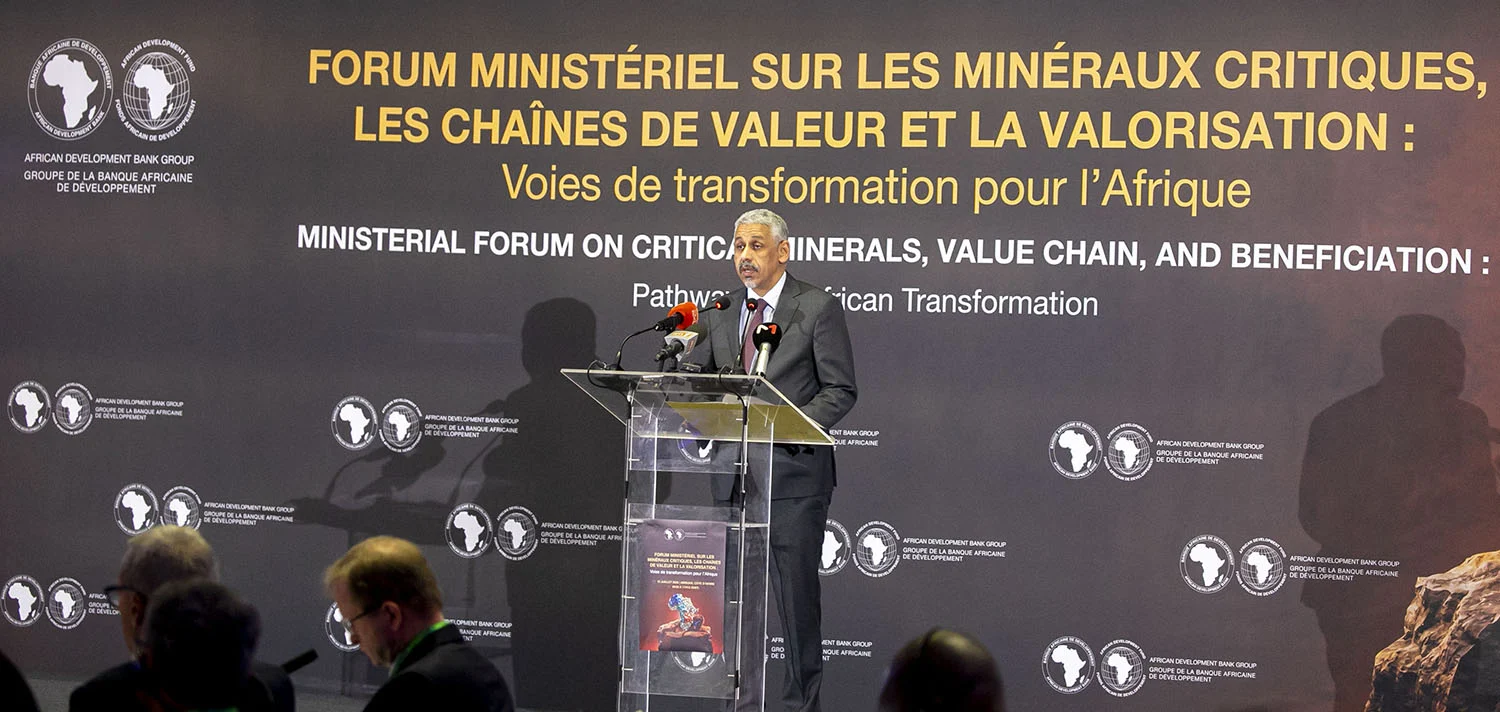
ABIDJAN, Côte d’Ivoire – African governments have reaffirmed their commitment to transforming the continent’s vast critical mineral resources into a catalyst for industrialisation, economic diversification and sustainable development, calling for a decisive shift away from the export of raw minerals.
The call was made during the Ministerial Forum on Critical Minerals, Value Chains and Beneficiation, held in Abidjan on 10 July 2026 and organised by the African Development Bank (AfDB).
The forum brought together ministers responsible for mining, energy, industry and natural resources, alongside representatives from the African Union Commission, the African Continental Free Trade Area (AfCFTA) Secretariat, the United Nations Economic Commission for Africa (UNECA), development finance institutions and private sector stakeholders.
Participants agreed that Africa must capture greater value from its mineral wealth by investing in domestic processing, regional value chains and manufacturing industries rather than continuing to export unprocessed raw materials.
Africa Holds the Resources but Not the Value

Africa possesses an estimated 30% of the world’s critical mineral reserves, including cobalt, lithium, graphite, copper, manganese, nickel, platinum group metals and rare earth elements—minerals that are essential for electric vehicles, battery storage, renewable energy technologies and advanced manufacturing.
Despite this abundance, much of the continent continues to export raw ores while processing, refining and manufacturing take place elsewhere, limiting Africa’s share of the economic benefits generated by the global energy transition.
Forum participants warned that the current extractive model exports jobs, industrial capacity, technology and investment opportunities that could otherwise support Africa’s long-term economic transformation.
Regional Value Chains Key to Competitiveness
A central theme of the discussions was the need to build integrated regional value chains under the African Continental Free Trade Area (AfCFTA).
Rather than pursuing fragmented national strategies, African countries were encouraged to specialise according to their comparative advantages while collaborating on mineral processing, refining, manufacturing and logistics.
Delegates argued that coordinated regional production systems would strengthen Africa’s bargaining power in global supply chains while making the continent more attractive to investors seeking reliable sources of critical minerals.
The forum also highlighted the importance of connecting mining projects with transport corridors, energy infrastructure, ports, industrial parks, financial institutions and skilled labour to create competitive industrial ecosystems.
Creating an Enabling Environment for Investment
To unlock greater value from critical minerals, participants called for increased investment in infrastructure, including reliable electricity, transport networks and logistics facilities.
They also emphasised the need for stronger geological data, transparent regulatory frameworks, improved governance and investor-friendly policies capable of supporting long-term industrial development.
Good governance, transparent licensing systems and predictable regulations were identified as essential foundations for attracting responsible investment into Africa’s mining and processing industries.
Technology transfer, skills development and greater transparency across mineral supply chains were also highlighted as priorities to ensure that the benefits of critical mineral development remain within African economies.
AfDB to Support Mineral Value Addition
The African Development Bank reaffirmed its commitment to supporting Africa’s critical minerals strategy by helping governments prepare bankable projects, finance enabling infrastructure and mobilise investment for mineral beneficiation.
The Bank also pledged to support reforms aimed at strengthening regional value chains and expanding industrial processing capacity across the continent.
According to the AfDB, strategic investments in processing and manufacturing could enable African countries to retain a much larger share of the value generated by the global demand for critical minerals.
A Defining Opportunity for Africa
Leaders attending the forum described the global shift towards clean energy as a historic opportunity for Africa to reshape its role in international mineral markets.
Rather than remaining suppliers of raw materials, African countries are increasingly positioning themselves as future producers of refined minerals, battery materials and other value-added products that support industrial growth, export diversification and job creation.
If supported by coordinated policies, regional cooperation and sustained investment, Africa’s critical mineral resources could become a powerful engine for industrialisation, economic resilience and long-term prosperity.
The Abidjan declaration signals growing continental consensus that the future of Africa’s mining sector lies not only in extracting minerals, but in building competitive industries that process, manufacture and export higher-value products to global markets.