


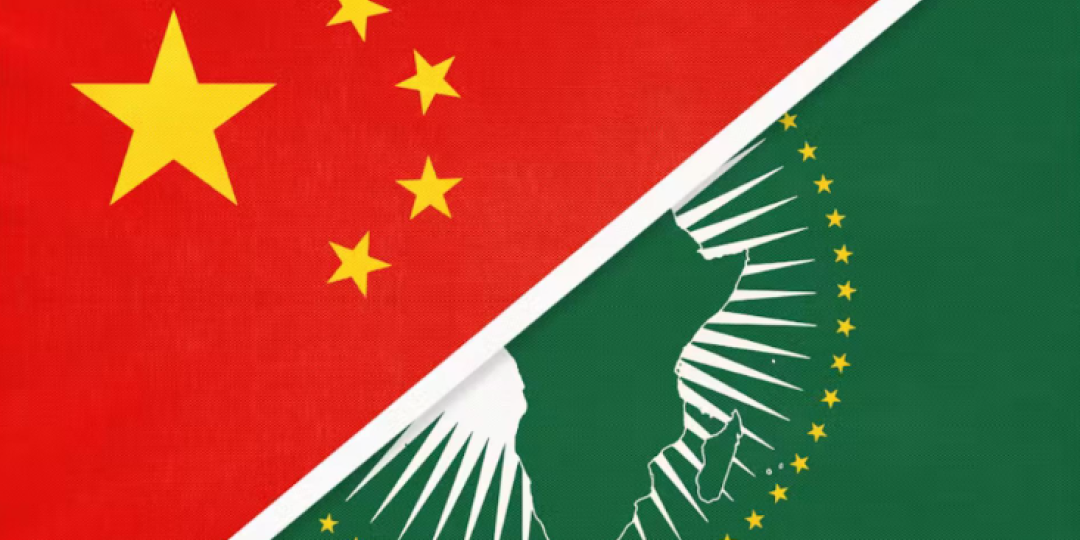
China’s economic engagement with Africa is entering a new phase.
For more than two decades, Beijing’s presence on the continent was defined largely by infrastructure financing, state-backed loans, and large-scale construction projects. Railways, highways, ports, power plants, and industrial zones became the visible symbols of China’s rise as Africa’s most influential economic partner.
Today, however, that model is evolving.
Rather than retreating from Africa, China appears to be repositioning itself to take advantage of a changing economic landscape shaped by debt sustainability concerns, industrialisation ambitions, and the growing promise of the African Continental Free Trade Area. The shift signals a transition from a lender-focused relationship toward one increasingly centred on trade, investment, manufacturing, and market integration.
A Strategic Evolution, Not a Withdrawal

Recent analysis from the China-Africa Economic Bulletin (2026 Edition) suggests that China’s changing approach is less a retreat and more a strategic evolution. Beijing is seeking to build on relationships established through years of infrastructure financing while adapting to new economic realities across the continent.
The era of large-scale resource-backed lending and expansive infrastructure credit is slowing. Chinese loan commitments to Africa have fallen sharply since 2020, declining to below $5 billion annually after years in which Chinese lending often exceeded that of major multilateral development institutions.
At the same time, China is increasing its focus on trade, private-sector investment, manufacturing partnerships, and financial market engagement through instruments such as panda bonds issued by African governments and institutions.
The objective appears clear: reduce direct exposure to sovereign debt risks while maintaining and expanding economic influence through commercial relationships.
AfCFTA Changes the Equation
A major catalyst for this strategic shift is the emergence of the AfCFTA, which is gradually creating the world’s largest free trade area by number of participating countries.
For Chinese companies, the agreement fundamentally changes the economics of investing in Africa.
Rather than viewing African countries as fragmented national markets, investors increasingly see access to a potential continental market of more than 1.3 billion people. Companies establishing manufacturing or assembly operations in one African country can potentially serve multiple markets through regional value chains and reduced trade barriers.
Analysts argue that this gives China a significant advantage. Having already established deep commercial, diplomatic, and infrastructure relationships across much of the continent, Chinese firms may be better positioned than many competitors to capitalise on Africa’s economic integration process.
Zero-Tariff Access Expands Trade Opportunities
China has reinforced this strategy through a major trade policy shift.
Beginning on 1 May 2026, Beijing expanded zero-tariff treatment to imports from 53 African countries with which it maintains diplomatic relations, broadening preferential market access far beyond the least-developed countries previously covered by similar arrangements.
The policy is expected to benefit a wide range of African exports, including coffee, cocoa, citrus fruits, processed agricultural products, minerals, and manufactured goods. It also reflects growing recognition that trade imbalances have become a significant issue within China-Africa economic relations.
While bilateral trade reached approximately $348 billion in 2025, Chinese exports continue to dominate the relationship. Chinese exports to Africa reached roughly $225 billion, compared with about $123 billion in African exports to China.
Expanding duty-free access could help African producers increase exports and move higher up value chains, particularly if governments succeed in promoting local processing and industrial production rather than relying solely on raw commodity exports.
From Infrastructure to Industrialisation
The shift also reflects changing priorities on the African side.
Many governments are increasingly focused on debt sustainability, domestic manufacturing, industrialisation, and value addition. Rather than pursuing infrastructure expansion at any cost, policymakers are seeking investments that generate employment, strengthen export capacity, and support long-term economic transformation.
China’s evolving strategy appears aligned with those priorities.
Chinese foreign direct investment into Africa has rebounded in recent years, driven by selected large-scale projects, manufacturing investments, mining developments, logistics infrastructure, and industrial parks.
This transition could ultimately produce a more commercially driven relationship, where trade and production increasingly replace sovereign lending as the foundation of engagement.
Competition for Africa Is Intensifying
China’s repositioning also reflects growing geopolitical competition.
The continent has become an increasingly important arena for economic influence as countries such as India, Türkiye, the Gulf states, the European Union, and the United States seek deeper commercial and strategic ties with African economies.
Yet China retains important advantages.
Its extensive infrastructure footprint, established supply chains, manufacturing expertise, financing institutions, and long-standing diplomatic engagement provide a foundation that newer entrants may find difficult to replicate quickly.
The AfCFTA may strengthen that advantage by allowing Chinese-backed investments to operate within a progressively integrated continental market.
Opportunities and Risks
The opportunities are significant.
Expanded trade access, increased manufacturing investment, stronger regional value chains, and deeper industrial cooperation could support Africa’s long-term economic development objectives.
However, challenges remain.
Trade imbalances continue to favour China, and many African economies remain heavily dependent on exporting raw materials. Questions also persist regarding local industrial competitiveness, technology transfer, and the extent to which African firms will be able to capture value within evolving supply chains.
The success of this new phase will depend not only on Chinese investment strategies but also on Africa’s ability to strengthen productive capacity, improve logistics, enhance regional trade infrastructure, and develop competitive industries.
The Next Phase of China-Africa Relations
China’s role in Africa is not disappearing. It is changing.
The image of China as primarily a financier of mega-projects is gradually giving way to a more complex economic relationship centred on trade, manufacturing, investment, logistics, and market access.
As AfCFTA reshapes the continent’s economic geography, Beijing appears determined to position itself not only as Africa’s largest trading partner but also as one of the principal beneficiaries of Africa’s next phase of economic integration.
For African economies, the challenge will be ensuring that this new model delivers not only greater trade volumes, but also industrial development, value addition, and sustainable economic growth.
The future of China-Africa relations may therefore be defined less by loans and infrastructure and more by who captures value in the emerging continental marketplace.