


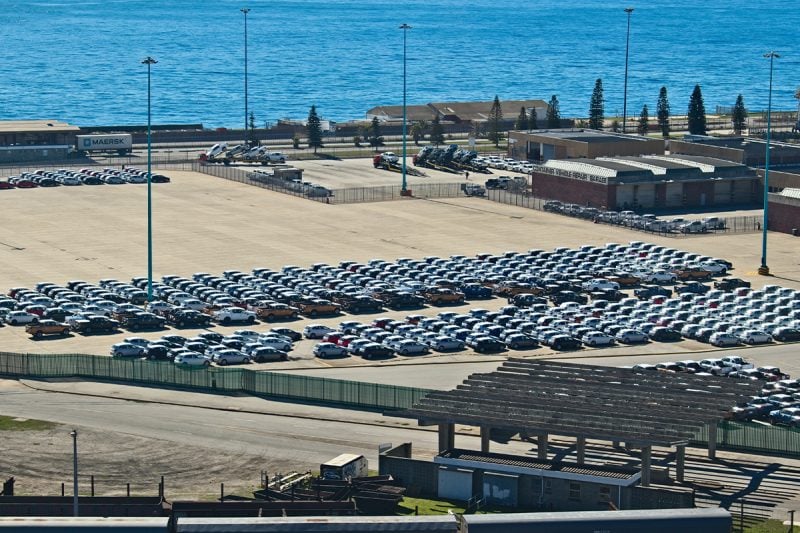
South Africa’s automotive manufacturing industry is facing mounting pressure from US tariffs and the proposed termination of the country’s eligibility under the African Growth and Opportunity Act (AGOA), threatening a once-lucrative export market.
The Automotive Business Council (Naamsa) has warned that the planned exclusion, effective January 1, 2027, could further strain trade relations between the two countries, although its additional direct impact on vehicle exports may be limited because shipments to the US have already fallen sharply.
In 2024, South Africa exported 24,681 locally manufactured vehicles to the US, generating R28.6 billion in export revenue under AGOA.
The automotive sector accounted for approximately 64% of South Africa’s AGOA trade that year, highlighting the importance of preferential access to the American market.
However, the introduction of US Section 232 tariffs has significantly disrupted these trade flows.

US tariffs drive sharp decline in vehicle exports
The US imposed 25% tariffs on imported vehicles from April 2025 and automotive parts from May 2025 under Section 232 of the Trade Expansion Act.
According to Naamsa, South African vehicle exports to the US fell by 83.2%, from 24,682 units in 2024 to just 4,136 units in 2025.
The council said this decline provides important context for assessing the additional consequences of South Africa losing its AGOA eligibility.
Importantly, the proposed termination does not prevent South African automotive products from entering the US market. Exports will remain possible, but will be subject to the applicable American tariff regime.
Naamsa said AGOA had played an important role in strengthening trade and investment ties between the two countries, supporting decades of investment, manufacturing integration and market development.
The council is encouraging diplomatic engagement to secure a constructive outcome that preserves commercially viable access to the US market.
Automotive industry explores alternative export markets
As trade conditions in the US deteriorate, South Africa’s automotive manufacturers are increasingly pursuing opportunities in other markets.
Naamsa highlighted improved export performance in destinations such as Canada, where original equipment manufacturers (OEMs) have been working to strengthen their presence.
Although Canadian export volumes remain relatively small compared with previous shipments to the US, the council said they form part of the industry’s broader market diversification strategy.
South Africa is also seeking to strengthen trade relationships through established agreements, including the EU-SADC Economic Partnership Agreement, the SACU-UK Economic Partnership Agreement and the African Continental Free Trade Area (AfCFTA).
However, Naamsa cautioned that developing alternative markets takes time and cannot immediately replace established trading relationships and long-term investments.
Automotive sector remains vital to manufacturing and jobs
The pressure on vehicle exports comes as South Africa’s automotive industry continues to play a major role in the national economy.
In 2025, the sector accounted for 23.8% of domestic manufacturing output and supported an extensive industrial network involving vehicle manufacturers, component suppliers, logistics providers and related businesses.
Naamsa warned that predictable and competitive access to international markets is essential for sustaining production, investment, supplier development and employment.
The council has committed to supporting the Department of Trade, Industry and Competition (DTIC) in efforts to protect the country’s manufacturing base and safeguard jobs.
While South African manufacturers are pursuing new export destinations, the US remains an important trading partner. The proposed AGOA termination therefore adds another challenge to an industry already adjusting to higher tariffs and declining export volumes.