


The African Export-Import Bank (Afreximbank) and its partners are advancing efforts to build an integrated African automotive industry through increased investment, regional manufacturing partnerships and stronger cross-border supply chains.
The initiative took centre stage at the inaugural Africa Automotive Investment Forum, held in El Alamein, Egypt, alongside the Alamein Africa Forum. The two-day event brought together policymakers, vehicle manufacturers, component producers and investors to discuss reforms and commercial partnerships needed to accelerate automotive industrialisation across the continent.
Afreximbank organised the forum in partnership with the African Association of Automotive Manufacturers (AAAM), the African Continental Free Trade Area (AfCFTA) Secretariat, Egypt’s Ministry of Investment and Foreign Trade, and South Africa’s Department of Trade, Industry and Competition.
The discussions focused on attracting investment, facilitating joint ventures, transferring technology and expanding local manufacturing. These efforts are intended to create skilled employment, strengthen small and medium-sized enterprises and reduce Africa’s reliance on imported vehicles and automotive components.
Afreximbank has committed US$1 billion to financing Africa’s automotive sector, reflecting its broader strategy to promote industrial development, manufacturing and intra-African trade.

Kanayo Awani, the bank’s Executive Vice President for Intra-African Trade and Export Development, said automotive manufacturing could play a central role in Africa’s economic transformation by strengthening regional value chains and expanding industrial capabilities.
She highlighted opportunities in component manufacturing, supported by Africa’s raw materials and growing skills base. These resources include lithium, cobalt, manganese, nickel, copper, iron and steel, which are important to conventional vehicle production and the emerging electric vehicle industry.
Afreximbank is advocating a pan-African automotive ecosystem in which vehicle and component manufacturers operate through interconnected regional supply chains, allowing more production and value addition to take place within Africa.
Egypt–South Africa Partnership Advances Component Manufacturing
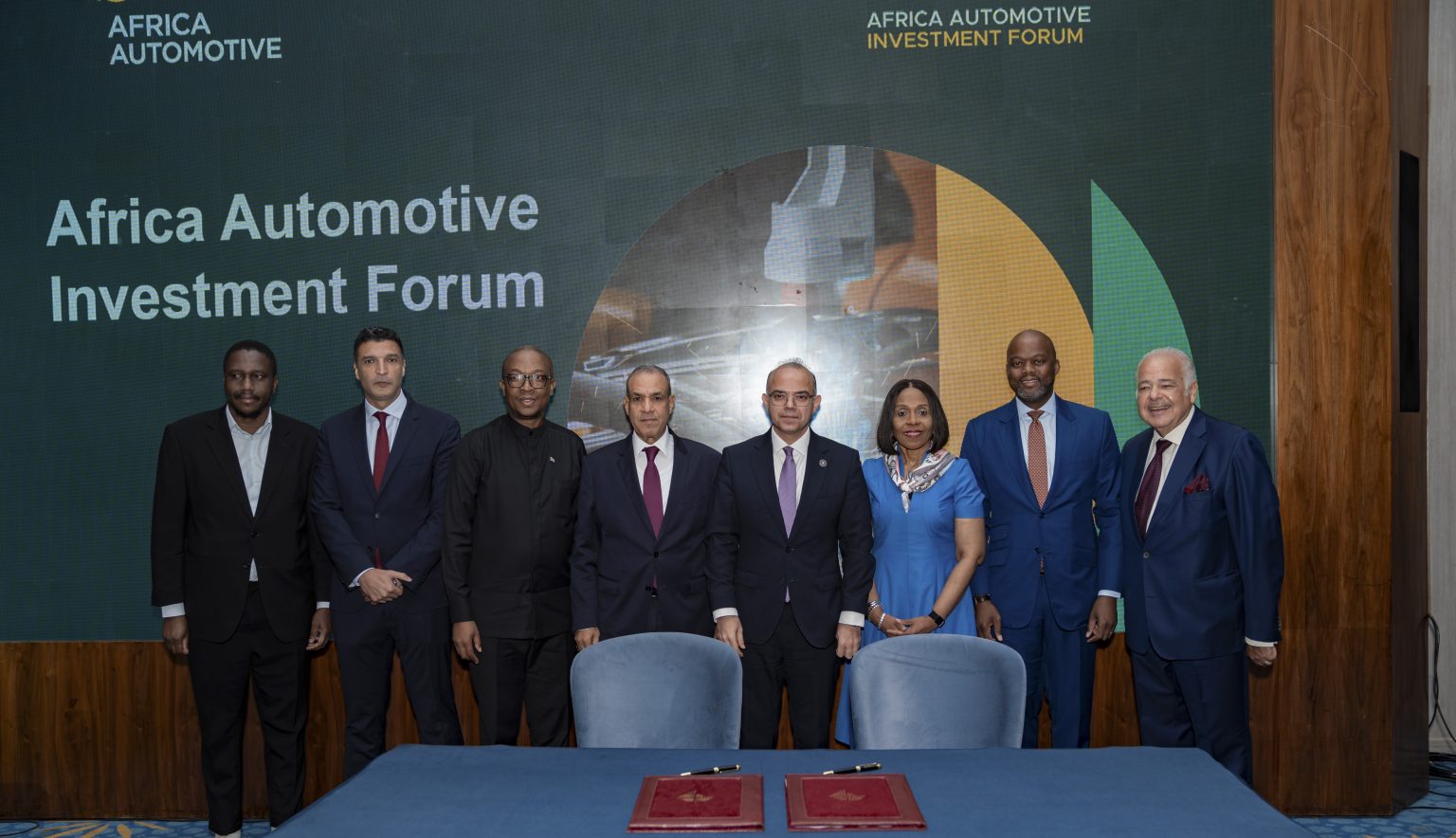
A key outcome of the forum was the signing of a joint venture agreement between South African company Malben Engineering and Egypt-based industrial group El Araby Group to establish a platform for manufacturing automotive components for Egypt, South Africa and wider African markets.
The partnership will combine El Araby Group’s industrial, engineering and technological capabilities with Malben Engineering’s more than 50 years of experience in manufacturing and forming metal automotive components.
The agreement illustrates how cross-border industrial partnerships could strengthen local supplier networks, expand manufacturing capacity and increase trade in automotive products across the continent.
Tarek Mosaad, President of the AAAM, said the agreement on AfCFTA rules of origin had established an important foundation for a more integrated automotive industry. He emphasised the need to translate this progress into factories, stronger supplier networks, job creation and increased intra-African trade.
He added that Africa needed to be viewed as an integrated commercial opportunity rather than a collection of separate national markets.
AfCFTA Framework Targets Regional Automotive Value Chains
The AfCFTA Secretariat and the AAAM also signed a memorandum of understanding to strengthen cooperation in developing Africa’s automotive industry.
The agreement provides a framework for implementing the Strategy for the African Automotive Sector under the AfCFTA. Its areas of cooperation include rules of origin, customs procedures, trade facilitation, automotive standards, capacity building, regional supplier development, mineral beneficiation, investment mobilisation and emerging automotive technologies.
AfCFTA Secretary-General Wamkele Mene identified three priorities: developing investment-ready projects and competitive production locations, strengthening regional supplier networks and localisation, and establishing commercially viable regional production.
The partnership is also expected to support efforts by the AfCFTA Secretariat and Afreximbank to advance the AfCFTA Automotive Investment Plan, with the aim of mobilising investment and building competitive manufacturing networks.
A separate Egypt–South Africa Business Council was established at the forum to develop bilateral trade and investment projects across automotive manufacturing, mining, renewable energy, agriculture, pharmaceuticals, transport and logistics.
The council is expected to explore opportunities to use infrastructure, including the Suez Canal and national ports in both countries, to facilitate trade between northern and southern Africa.
Delegates also visited Nissan Motor Corporation, General Motors Egypt, Al Mansour Automotive and components manufacturer Mobica in Egypt’s 6th of October City. The visits showcased vehicle assembly, localisation, supplier development and manufacturing capabilities, providing practical examples of investment and technology-transfer opportunities.
Rising Vehicle Demand Creates Investment Opportunities
African vehicle demand is expected to reach 5 million units by 2035, according to projections cited at the forum. Growing global interest in new energy vehicles could also create opportunities for African countries to use their mineral resources to develop domestic manufacturing capabilities.
Participants stressed that supportive policy frameworks, appropriate investment incentives and affordable financing would be essential to attracting capital and stimulating demand.
The broader objective is to move Africa beyond its role as a major vehicle-importing market towards a more competitive manufacturing base, with regional production networks supplying vehicles and components across national borders.
Afreximbank’s financing commitment, the Egypt–South Africa joint venture and the new AfCFTA–AAAM cooperation framework represents steps towards that ambition. Their long-term impact will depend on converting agreements into productive investment, competitive factories, stronger local suppliers and increased trade under the continental free trade framework.