


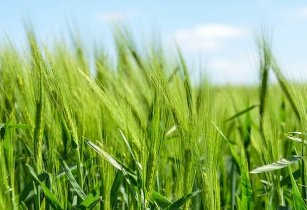
Growth in Crop Production and Supply in 2025
Nigeria’s agricultural sector recorded steady growth in 2025, driven largely by improved output of staple crops, according to the 2025 Agricultural Performance Survey (APS) conducted by the National Agricultural Extension and Research Liaison Services (NAERLS).
The survey shows increased production of key staples—including rice, maize, sorghum, millet, cowpea, yam and cassava—compared with 2024 levels. This growth was supported by expanded cultivated areas, gradual improvements in farming practices and notable resilience among farmers across several states.
Wet-season assessments further confirmed higher national output for major crops. Rice and maize, in particular, recorded measurable gains, reflecting broader improvements in crop performance and productivity.
The expansion in supply contributed to a moderation of food prices across Nigeria’s six geopolitical zones. Significant price declines were observed for staples such as maize and rice, signalling improved availability in local markets and easing pressure on consumers.

Contribution to the Economy
Agriculture remained one of Nigeria’s most important economic sectors in 2025. Sectoral output reached ₦30.5 trillion in the third quarter, with crop production accounting for nearly 66 percent of total agricultural output, followed by livestock, forestry and fisheries.
This performance underscores agriculture’s growing contribution to Gross Domestic Product (GDP) and its strengthening role in supporting economic stability and employment.
Although budgetary allocations to agriculture remain modest relative to other sectors, the 2025 federal budget marked a notable increase in funding for the Ministry of Agriculture. Resources were directed toward food production initiatives, mechanisation, fertiliser distribution and value-chain development.
Improved Market Conditions and Price Trends
Despite sharp increases in production costs—input prices for crops such as maize and soybeans rose between 29 percent and 36 percent—higher output helped drive down market prices.
Improved harvest outcomes and better distribution across markets contributed to falling staple food prices nationwide, partially offsetting the impact of inflation on household food expenditure.
Persistent Challenges
While growth was recorded, Nigeria’s agricultural sector continues to face significant structural and environmental constraints:
Rising Input Costs: High prices for fertiliser, fuel and other inputs compressed profit margins for smallholder farmers and raised overall production costs.
Climate and Pest Pressures: Irregular rainfall, localised flooding and pest outbreaks disrupted yield stability in several regions.
Mechanisation Gaps: Progress in mechanisation remains uneven across states, limiting productivity gains for many farmers.
Post-Harvest Losses: High post-harvest losses, particularly in the South-West and North-Central zones, continue to erode food supply and farmer incomes.
Livestock and Fisheries Setbacks: Poultry diseases and constraints in fisheries production weighed on overall sector performance.
2026 Outlook: Continued Growth Under Pressure
Based on current trends, Nigerian agriculture is expected to build on its 2025 gains in 2026, with further expansion in staple crop production and increased emphasis on value-chain development, mechanisation and climate-smart practices.
Government agencies and development partners are working to strengthen planning and monitoring systems, including the introduction of dry-season production surveys to provide year-round data and improve policy responsiveness.
However, sustaining growth will require addressing key pressure points, including climate variability, rising input costs and infrastructure deficits. Investment in irrigation, storage facilities and improved seed systems will be critical to enhancing resilience.
Food Security Outlook
Despite recent gains, food security remains fragile, particularly in conflict-affected northern regions. The United Nations World Food Programme has warned that up to 35 million Nigerians could face severe food insecurity by 2026, driven largely by insecurity and disruptions to farming activities.
This outlook highlights the need to integrate agricultural growth strategies with security, stability and rural development policies to prevent food crises and protect livelihoods.
Policy and Investment Environment
Nigeria’s broader economic strategy for 2026 continues to emphasise diversification and macroeconomic stability, with agriculture positioned as a central pillar. While infrastructure and security dominate budget priorities, agricultural performance remains closely linked to rural development, employment and income generation.
Stronger investor confidence and expanded public-private partnerships—such as Special Agro-Industrial Processing Zones—could attract capital, technology and processing capacity, helping to reduce waste and strengthen value chains.
Key Focus Areas for 2026
Climate-Smart Agriculture and Water Management: Investment in irrigation and water-efficient technologies will be essential to mitigate climate risks.
Input Access and Mechanisation: Improved affordability and availability of fertiliser, quality seeds and machinery will help raise productivity, particularly for smallholders.
Strengthened Extension Services: Expanded advisory services, including dry-season and real-time support, will improve adoption of best practices.
Rural Infrastructure and Value Chains: Investments in storage, transport and processing facilities will reduce losses and increase farmer incomes.
Conclusion
In 2025, Nigeria’s agricultural sector recorded steady growth, strengthened its contribution to GDP and improved food availability, even as rising input costs, climate shocks and uneven mechanisation constrained productivity.
Looking ahead to 2026, the sector remains positioned for continued progress—provided that policy coherence, investment, security and climate resilience measures are aligned. Sustained gains will depend on addressing core structural challenges and linking smallholder productivity to national food security objectives.
Sources: VON News, VOA News, Leadership, Economic Confidential, The Guardian Nigeria, FMNIFO, BusinessDay Nigeria, AP News, Reuters.